|
|
 |
|
|
|
|
Hebrew for Christians
|
|
|
|
Current Online Articles
|
|
|
|
The following articles by John J. Parsons explore various facets of the Jewish roots of the Christian faith, covering a wide range of issues, including questions about Torah observance, the relationship between the followers of Jesus and Israel, and much more. For usage permissions and copyright information, please contact the author.
|
|
|
|
|
|
|
|
The parable of the "Rich man and Lazarus" (Luke 16:19-31) is one of the most sobering and consequential of the Scriptures. Yeshua's concise and brilliant story ranges over the issues of life and death and of our ultimate destiny beyond the grave. It answers perennial questions about where people go when they die, and it gives counsel about how to plan for the inevitability of judgment. It forewarns of the terrifying prospect of hell and eternal torment while it comforts those who seek heavenly blessing and eternal life.
|
|
|
|
|
|
|
We "forgive" God by letting go of our (usually subconscious) demands to be something other than what we are, and that means giving up hard feelings of disappointment, bitterness, and rage over things we cannot change. We must abandon the need to "justify our existence" on our own terms. In that sense "forgiving God" is a way of forgiving ourselves, since holding on to our hurts, either by self-pity or blaming others, chains the pain to our hearts, enslaving us to despair.
|
|
|
|
|
|
|
Yeshua solemnly warned those who professed faith: "Not everyone who says to me, 'Lord, Lord,' will enter the kingdom of heaven, but the one who does the will of my Father who is in heaven. On that day many will say to me, 'Lord, Lord, did we not prophesy in your name, and cast out demons in your name, and do many mighty works in your name?' And then will I declare to them, 'I never knew you; depart from me, you workers of lawlessness'" (Matt. 7:21-23). Despite the practice and profession of their faith, these people were strangers to God... They had a false sense of assurance, believing that they were "serving God" while they really were not... So the essential question here is whether Yeshua truly knows you. You may know a lot about God, religion, spirituality, and yet you may remain unknown by him... So where do you find life? What are you loving? Where are you going?
|
|
|
|
|
|
|
The late Henri Nouwen said that there are two great fears (or wounds) that we all face. The first is the fear that we were not wanted at the time of our birth into this world, and the second is that we will not be wanted at the time of our death. If you carry a wound of abandonment within your heart - if you live in dread over your worth as a human being, seriously wondering whether it would have been better had you never been born, then you know the taste of hell itself - the emotional prison of feeling lost, defective, rejected, shameful - unable to love or to be loved...
|
|
|
|
|
|
|
A pain-free life is not necessarily a sign of blessing, of course, since it might indicate that the person is no longer being "educated for eternity," and therefore that God no longer talks to him anymore. This is one way to understand the tragic irony of why the wicked prosper in this world, for they shall have received their reward here, but nothing in the world to come (Matt. 6:5; Job 27:8). On the other hand, pain can "goad" the soul to draw near to God for healing, which is the essential and consummate blessing, after all...
|
|
|
|
|
|
|
When was the last time you sacrificed a lamb for your Passover seder? Or went to a religious service to offer a bullock for the guilt of your sin? Have you been careful to make pilgrimage three times a year to the Holy Temple to appear before the Lord as the Torah demands? Questions like these seem strange in light of the revelation we have in Yeshua our Messiah concerning the meaning of salvation. In this article (and audio podcast) I sort through some of the tensions we might experience when we consider whether Christians are required to follow the law of Moses or whether there is another way in light of the ministry of Yeshua the Messiah. I hope you will find it helpful.
|
|
|
|
|
|
|
The Apostle Paul summarized the message of the gospel by means of four empirical propositions, namely: 1) that Messiah died for our sins according to the Scriptures; 2) that he was buried; 3) that he was raised on the third day according to the Scriptures; and 4) that he was seen alive by various eyewitnesses after his death (see 1 Cor. 15:1-8). Paul went on to argue that the reality of the resurrection is the center of salvation, for if Yeshua had not been raised from the dead, his repeated declarations that he would suffer, die, and come back to life would be untrue, and therefore we would still be captive to our sins. The great fact that Yeshua was indeed raised from the dead, however, demonstrates that his mission to redeem humanity was successful, and that death has been "swallowed up" by means of his victory over the curse of sin (1 Cor. 15:36). This is the core message that Paul regarded as being of "first importance" and essential to salvation.
|
|
|
|
|
|
|
There is a gap between the "real" and the "ideal," between our present sense of exile and our hope that one day we will be in our heavenly home; there is an inherent and ongoing dualism we experience as we sojourn through our days. On the one hand, if we make time to reflect on what is "real," we will eventually encounter the "Parmenidean" realm of "being," that is, the totality of sheer existence, the inescapable presence that surrounds and pervades any "thing" whatsoever: the "ground" of existence; the timeless sense of unity, perfection, and so on. The heart's response to this awareness is humble acceptance - to surrender to all that is -- in wonder over the miracle of consciousness and the sheer gift of life itself. The "real" is what "is" and that is a monolithic mystery...
|
|
|
|
|
 |
|
|
|
|
|
A source of potential confusion for translators of the Greek New Testament concerns how the word "nomos" (νόμος), which is often simply translated as "law," is to be understood. Does "nomos" always refer to the law code of Moses or does it perhaps more generally refer to the "Old Testament"? Does it go beyond the idea of a imperative to include general principles, such as the "law of sin and death"? Of particular importance is how are we to distinguish between the use of nomos as "law" as opposed to various other words used in the Hebrew text to indicate obligation. Perhaps most generally, is it right to substitute the idea of "Torah" for the word "nomos" (and vice-versa) when we translate and read the New Testament?
|
|
|
|
|
|
|
|
|
|
|
Many of today's church leaders seem to hold views about ethnic Israel that express institutionalized prejudice and an "anti-Jewish" bias. But how did the church get so far removed from the Jewish roots of the faith? Is Christianity essentially anti-Jewish in its perspective?
This brief article surveys the history of an interpretation method that regularly gives rise to the idea that the Christian church is "reconsituted" or "completed" Israel.
|
|
|
|
|
When studying the Jewish roots of Christianity, certain questions often arise regarding the nature of the "Church," the nature of "Israel," and the relationship between them. Do Gentile Christians become "Jewish" on account of their relationship to Jesus? Does the "Church" somehow replace the Jewish people in God's plan as the "new Israel"? Exactly how should we understand the relationship between the Church and Israel?
|
|
|
|
|
|
|
|
Philosophically considered, suffering is a problem of meaning, since without a coherent narrative of why we suffer, our sense of order, intelligibility, and even our very sanity may be threatened. The problem of suffering is therefore the problem of interpreting our life experiences without succumbing to the threat of nihilism and despair. Faith justifies our struggle, giving it meaning, purpose, and a glorious end; an honest conviction must give voice to our anguish and yet still be able to say "yes" to the validity and significance of hope itself.
|
|
|
|
|
|
|
One of the earliest challenges to the integrity of the gospel message came from certain "false brethren" who went about teaching Gentile followers of Yeshua to "keep the law" of Moses. Apparently Paul had to deal with this challenge repeatedly during his years of ministry, but when the apostle Peter himself seemed to concede to this idea by disassociating with Gentile believers in Atioch, Paul publicly rebuked him for turning away from the essential truth of salvation. Paul's correction of Peter provided him with an opportunity to clarify the meaning of the gospel and to settle the question of whether believers in Yeshua were in fact required to keep the law of Moses. Paul's answer constitutes the substance of the Book of Galatians.
|
|
|
|
|
|
|
Dietrich Bonhoeffer, who was surrounded by the atrocious evil of Nazi Germany, regarded stupidity as more dangerous than outright evil, since stupidity is a type of irrationality, a chosen ignorance of what is real and true. Against such willed ignorance we are often defenseless, since any reasoning that appeals to transcendental moral truth finds no traction, carries no weight, and has no effect. The devil, then, seeks first of all to stupefy people, that is, to drug them or flatter and persuade them to think that there is no need to engage in serious thinking or to humbly question their assumptions...
|
|
|
|
|
|
|
|
|
|
|
Death is an inevitable aspect of life and therefore it constitutes the central question of our existence in this world. Pleasures, wealth, and worldly ambition do not satisfy us but are like chasing after the wind -- they are "havel havalim" (הֲבֵל הֲבָלִים), the utmost of vanities, as King Solomon said long before the French existentialists expressed the same idea (Eccl 1:2). We live in a world of constant flux wherein ha'kol over (הכל עובר), "everything passes" and nothing abides. In light of this, can we find healing from the lethality of existence?
|
|
|
|
|
|
|
|
|
|
|
Why does God want us to face the truth about death? Why does Moses ask God to teach us to "number of our days?" (Psalm 90:12). The reason is that by nature people deny the reality of death - they hide their eyes from it, ignore it, and pretend it's not there - so they can continue to live under the illusion that they are in control of their lives, that they are the center, that they are immoral little "gods." Death threatens the ego and humbles us to confess the truth about life, namely that we are not in control, that we cannot choose to be immortals, that we do not have power to exist in ourselves, and therefore we need life from a different source - spiritual life - wherein we receive a new identity a new being found in relation to God.
|
|
|
|
|
|
|
|
|
|
|
When we encounter horrific evil, it is natural for us to groan and lament, to feel indignation and outrage, and to cry out for divine justice and even retribution… As people of faith in the LORD, we profoundly feel the tension between affirming both that our loving Creator sustains all things by the word of his power (Deut. 32:4; Psalm 33:4; Col. 1:16-17, Heb. 1:3, etc.) and yet acknowledging that the ongoing depravity of human beings yields untold suffering, heartache, and pain in this world. This brief artcile considers some of the dialectical tensions of having faith in God in a dark world...
|
|
|
|
|
|
|
There is an inherent dualism in our reflective consciousness wherein we seek an eternal happiness and ultimate good that transcends anything that may be found in this temporal world. Our faith confesses that reality itself is "two-tiered," corresponding to two different realms of existence, namely, an "upper realm" of the immaterial and spiritual (i.e., heaven) and a "lower realm" of the material and physical (i.e., the natural universe). Upon reflection we may sometimes feel lonely and bewildered in this duality, not knowing how to "mediate" or bring together the opposite poles of our experience...
|
|
|
|
|
|
|
Though it is important to guard our sincere convictions and to be passionate about what we believe, we must nevertheless be careful to walk in humility before the mystery of life... After all, much is inscrutable to us, much is beyond our understanding, and therefore, if we are honest, we should be reverent before the "sacred secrecy" of everything. The humble person freely confesses that they "walk by faith, not by sight"-- by hearing the Word of God and heeding what the Spirit of God is saying to the heart...
|
|
|
|
|
|
|
According to many of the sages, the time immediately preceding the appearance of the Messiah will be a time of testing (nisayon) in which the world will undergo various forms of tribulation, called chevlei Mashiach (חֶבְלֵי הַמָּשִׁיחַ) - the "birth pangs of the Messiah." Some say the birth pangs are to last for 70 years, with the last 7 years being the most intense period of tribulation -- called the "Time of Jacob's Trouble" / עֵת־צָרָה הִיא לְיַעֲקב (Jer. 30:7). The climax of the Great Tribulation is called the great "Day of the LORD" (יוֹם־יהוה הַגָּדוֹל) which represents God's wrath poured out upon a rebellious world system.
|
|
|
|
|
|
|
|
|
|
|
The Word of God speaks: "If anyone does not live in Me, he is cast off as a branch, and withers..." (John 15:6). We find life only as we remain connected to the Source and Conduit of life, who is the Messiah, the Savior and LORD. True life grows out a heart connection with Yeshua, and without that connection our lives become vain and yield no eternal significance (John 15:5).
|
|
|
|
|
|
|
How important is the idea of the Sabbath day to you? Are you a Christian who goes to Church on Sunday, believing this is the "Lord's Day?" If so, please prayerfully consider the linked article, which hopefully will challenge some of your assumptions and help you better discern the truth of the Scriptures...
|
|
|
|
|
|
|
How we answer the question of why we suffer depends on how we interpret its meaning and its potential purpose in our lives. Does God orchestrate suffering for our ultimate good, as part of his plan for our lives, or does God respond to our suffering and seek to heal us from its influence? In other words, should we accept suffering as "inside" God's master plan for our lives, or somehow "outside" of that plan?
|
|
|
|
|
Christians who ignore their spiritual debt to the Jewish people and write them off as "unreachable" because of "God's sovereign purposes" are like Pontius Pilate who vainly washed his hands of the guilt he richly warranted... So-called pastors or teachers who deny God's unconditional promises given to Israel need to rethink whether they are serving the LORD God of Israel - or mere men (Gal. 1:10).
|
|
|
|
|
|
|
|
Rituals are inescapably a part of life. We celebrate birthdays, set our daily schedules, and organize our lives around a patterned series of events. Since they are inherently a part of human nature, the question then is not whether we will engage in them, but rather which ones we will observe...
|
|
|
|
|
|
|
It should be obvious that those who claim to worship "Jesus Christ" (i.e., Yeshua the Messiah of Israel) will necessarily have a heart for the Jewish people - and hopefully a desire to learn of the roots of their faith. This brief article attempts to argue that any form of Christianity that is not inherently Jewish is missing the mark and subject to error. Jewish identity is not an accident of the spirit, but a necessary part of being part of the family of God.
|
|
|
|
|
|
|
Yeshua repeatedly took the role of a "stumbling block" to test people's response to his ministry and message. Most people were offended at Him, of course, and in the end Yeshua was crucified for the sake of their offenses. After His death, the cross itself became the scandal of faith. The Apostle Paul referred to the "offense of the cross" which he did not want removed. But what is the "offense of the cross" and why is the proclamation of the crucified Messiah a scandal (σκάνδαλον) to Jews and foolishness to the Gentiles?
|
|
|
|
|
|
|
There are many false teachers at work today, including many who teach error in the name of the "Messianic movement." These teachers invariably claim that something more is needed than simple faith in the truth of the gospel message. This brief article is meant to appeal to those who are confused about the nature of salvation and to refute those who falsely claim that Christians are "under the law" of Moses rather than the law of the Messiah....
|
|
|
|
|
|
|
Commentators of the Book of Galatians often fail to make certain critical distinctions that often lead to exegetical errors and theological confusion. Perhaps the most serious of these errors is the failure to carefully distinguish between the idea of "law" and the idea of "covenant." It is a source of confusion to say, for instance, that we have "died to the law" (νόμῳ ἀπέθανον) without qualifying the idea of "law" to explicitly and exclusively refer to the legal subset of the terms of the covenant given at Sinai... Read more >
|
|
|
|
|
|
|
Because false teachers abound in the world, each of us is obligated to test (δοκιμάζω, lit. "determine if a metal is pure") the thinking of others to see if they are truly children of God (1 John 4:1). This is especially important regarding "Messianic" minstries that purport to be speaking the truth on behalf of the Living God....
|
|
|
|
|
Many rabbis think the word "Torah" refers to the subset of the writings of Moses called Sefer Ha-Brit (סֵפֶר הַבְּרִית) that defined the various ethical, social, and ritual obligations given in the Sinai Covenant (Exod. 24:7-8). However, claiming that the whole Torah may be reduced to the terms of the Sinai Covenant is an example of the logical "fallacy of composition," that is, inferring that something must be true of the whole from the fact that it is true of some part of the whole....
|
|
|
|
|
|
|
|
It is relatively easy for human reason to concede awareness of a transcendental power that created the universe and who is the Source of Moral reality, but it cannot fathom how such Supreme Power could be made manifest in a state of weakness, identifying with what is most broken, most perverse, and most sick in the human soul and condition. The cross of Messiah is a scandal because human pride wants to deny the reality that humanity is incurably wounded, sick and without hope apart from divine intervention....
|
|
|
|
|
Prayer is essentially a response to God's call for us, a kind of teshuvah (תְּשׁוּבָה), or turning (shuv) to God. God's love for us is the question, and our turning of the heart toward Him is the answer. It is not about finding the right words: "When you pray, rather let thy heart be without words than thy words be without heart" (Bunyan). Inwardly bow in awe before the throne of grace. Keep praying until you are able to let go and trust God's heart...
|
|
|
|
|
|
|
|
In the Torah we read about how Abraham was asked to sacrifice his beloved son Isaac as a burnt offering on Mount Moriah. In Jewish literature, this final test of Abraham is called the Akedah, or the "binding of Isaac." Now the question may be asked, whose sacrifice was greater, Abraham's or Isaac's? And how does the suffering of both portray the passion of Yeshua our Mashiach?
|
|
|
|
|
|
|
What's the role of tradition in our lives as Messianic Jewish believers? Are we to be "legalistic" in our observance of such matters as Shabbat, Torah reading, celebrating the holidays, and so on? Doesn't that impede the free flow of the Spirit? Why should we be tied to the Jewish calendar and ways of reckoning time? Are we obligated to think and act this way?
|
|
|
|
|
|
|
Many "emergent" churches focus on entertainment, on getting "results," and being "seeker sensitive" in the attempt to "spread the gospel" message. This so-called "gospel" focuses on meeting people's practical needs rather than heeding the message of the Kingdom of Heaven and salvation. The way of Yeshua, however, is anything but pragmatic. His focus entirely turns us around.
|
|
|
|
|
|
|
Every so often I get asked the question of whether Jesus (Yeshua) really spoke Hebrew (rather than Aramaic, Greek, or even Latin). After all, there seems to be some Aramaic words in the New Testament, and the text itself is written in Koine Greek. In this brief article, I take a look at the question.
|
|
|
|
|
During Shavuot we revisit the miracle of the giving of the Torah at Mount Sinai, but you might be surprised to know that Rabbinical Judaism believes that two Torahs were given to Moses at that time -- the written Torah and the oral Torah (in Kabbalistic traditions there is even a third or "hidden" Torah as revealed in the Zohar). This brief essay considers some aspects of the oral Torah and its significance to us as followers of Jesus.
|
|
|
|
|
|
This exploratory article raises some questions regarding whether the Torah of Moses is immutable (as is held by traditional Orthodox Judaism) or whether it is (itself) subject to overmastering purposes and plans of the Lord. In other words, is the word "Torah" to be linked to the covenant made with the nation of Israel at Mount Sinai, or is it perhaps grounded in a deeper covenantal purpose of God that is intended to embrace all of humanity?
|
|
|
|
In this short article, John Piper attempts to cajole his fellow pastors to take their duty to study the original languages of the Scriptures seriously. I would qualify Dr. Piper's comments, however, by insisting that the study of Hebrew must take priority over the study of the Greek text of the New Testament (though of course both are important).
|
|
|
|
|
|
After all, the Greek text of the New Testament derives its authority and veracity from the Jewish Scriptures, and not the other way around. In other words, while it's possible that the Hebrew Scriptures are true and the Greek Scriptures are not, it's impossible for the Greek Scriptures to be true if the Hebrew Scriptures are not. Too many Christian theologians go at this backwards, reading the Greek New Testament as the interpretative filter for the study of the Hebrew text. The hermeneutical primacy of the Hebrew text should be evident to all who study the Scriptures seriously.
|
|
|
|
|
|
Although the "world system" wants you to feel confused, perplexed, and threatened, we know there is no fear in love, since ein od milvado -- there is no real power apart from God. Ultimately, then, the purpose of the Great Tribulation is redemptive and healing (called yissurei ahavah, "the troubles of love"), a time that the prophets foretold would give birth to innumerable children.
|
|
|
|
|
|
|
I was recently asked what to make of Jesus' statement, "Unless you eat my flesh and drink my blood, you shall not have life within you" (John 6:53). In this brief article, I consider this statement in light of other metaphors and hyperbole used in the Gospels, especially in relation to the Jewish Passover Seder.
|
|
|
|
|
|
|
Since Jesus lived as an observant Jew, and since we're called to follow Him, shouldn't we live as observant Jews as well? This question is deceptively simple yet enormously complex, as most of you know. If it resolves to the question as to whether we should study and obey the Torah as Jesus did, then the answer is yes, though of course we must be clear exactly what this means, especially in light of the collective teaching of the New Testament.
|
|
|
|
|
|
|
Since parashat Ki Teitzei contains more legal commandments than any other Torah portion, it is natural that we should revisit the question of whether we are obligated to follow the lawcode of Moses or not... In light of the salvation given in Yeshua, what is our relationship to the law? What is the goal or "end" of the Law that the Apostle Paul discussed in his letters?
|
|
|
|
|
|
|
Why did God create the universe with both the possibility and the prevalence of suffering and evil? Surely an all-loving, all-knowing, and all-powerful God could have created a world free from the harrowing pain that plagues us all. The question is not academic, since suffering in our lives can lead to bitterness and chronic depression. Pointless suffering can lead to eventual madness and spiritual suicide, so it is vital to attempt to understand its function in our lives and find hope in our struggles.
|
|
|
|
|
There are some well-meaning souls who seem to think that the life of faith in Jesus should be relatively pain-free and without the normal sorts of infirmities that affect all people. These people seem to reason that since Jesus died on the Cross as a ransom for our sins, we should also be set free from pain and sickness of every kind. If a Christian gets sick or experiences loss in their life, then he/she must somehow be deficient either in their understanding of the power of the atonement or in the exercise of their faith. Well, is this true?
|
|
|
|
Many "Torah observant" teachers today seem to struggle with the idea that Jesus is none other than YHVH come "in the flesh." Though they might accept the idea that he was the Jewish Messiah, they appear to have trouble with the idea that "God has a Son" and therefore struggle with the idea of the "Trinity" (השׁלושׁ הקּדושׁ) -- or the Triune nature of the Godhead.
|
|
|
|
|
|
Did Jesus want us to become followers of Moses? Is the gospel message really a sort of "reformation" of Temple Judaism? Did Jesus come to renew the covenant made with Israel at Sinai or did he come to give us a new covenant that would somehow supersede it? In this brief article, I look at some statements that indicate both continuity and discontinuity of the Law in the teaching of Jesus.
|
|
|
|
|
|
Over the past few years there has been an increased interest in the Proto-Canaanite cuneiform that is surmised to predate and underlie ancient Hebrew. Is there any value in studying these ancient Proto-Canaanite symbols? Can we find "deep" or "esoteric" meaning in the Hebrew Scriptures by studying the Hebrew pictographs? In this brief article, I survey some of the linguistic and exegetical issues....
|
|
|
|
|
|
Kierkegaard tells the story of two young portrait artists who both sought to capture the essence of beauty in their paintings. One artist looked high and low for the "perfect face of beauty" but never found it. Tragically, he later gave up painting and lived in despair. The other artist, however, simply painted every face he saw and found beauty in each one. Now here's your question: Which of the two was the sincere artist?
|
|
|
|
|
|
|
|
Since I recently wrote about the role of oral Torah in Jewish thinking, I thought it would be worthwhile to look at Pirke Avot ("The Chapters of the Fathers"), a popular collection of ethical maxims found in the Mishnah (i.e., the core text of the Talmud). Though it is found in part of Seder Nezikin (a section of the Mishnah concerned with legal liabilities), some scholars believe Pirke Avot originally was intended to be a summary of the entire Mishnah itself.
|
|
|
|
|
You can't give away what you don't have.... Simplistic presentations of the Gospel message can be of limited value as starting points for discussion, but without taking the time to engage the total person by introducing him or her to the ongoing dialog about the life of a disciple, you run the risk of making a caricature of the life of faith.
|
|
|
|
|
|
The devil's logic is based on compromise, calling evil good and good evil, hissing out a seductive appeal to supposed esoteric knowledge, claiming superiority to the commonsense truth claims of experience, pragmatically justifying human atrocities, barbarity, and even cold-blooded murder for the sake of political expediency. It's the prevailing dogma of the princes of this world, and it is at work in the halls of power today.
|
|
|
|
One of the key characteristics of the "postmodern world" (i.e., the spirit of this age) is a rejection of the idea that objective truth exists. Truth is now regarded as a function of (political/social) power, and the ulterior motive ("subtext") for making a truth claim is simply the raw desire to control a set of outcomes. Let's see where this idea comes from, and where it leads...
|
|
|
|
|
|
The world has its message or its "song," chaverim, which is invariably focused on fear and egotistic self-preservation. We are tempted, are we not, to listen and accept such propaganda without serious reflection.... After all, we are always listening to someone, but the all-important question is to whom? The inner voice of your soul gets its messages from somewhere.
|
|
|
|
|
|
Both the physical world and the world of subjective values are inescapably known or apprehended by means of the ideal. The ideal world haunts everything we see, do, and experience. It is known in the laboratories of scientists as they seek to create the "perfect sphere" just as it is known in our private moments of shame and confession that we do not live as we ought.
|
|
|
|
|
|
What are we to make of the plethora of Bible translations we see today? In addition to the "mainstream" versions available (KJV, ASV, JPS, RSV, NIV, NASB, ESV, NKJ, NIB, NLT, TNK, etc.), you can also purchase any number of "Study Bibles" to suit your preferences.
|
|
|
|
|
|
During the High Holidays we are called to examine our lives and turn back to the LORD. The Talmud notes that someone may be motivated to do such teshuvah (i.e., repentance) out of fear of Divine Punishment or out of Love for God and the desire to become attached to Him....
|
|
|
|
|
|
Some people tend to regard the God of the "Old Testament" as a God of wrath, but the God of "New Testament" as a God of love. Such a perspective reveals a deficient understanding of the overarching unity of Scriptures - and of the very plan of God to redeem the world.
|
|
|
|
|
Moses foretold the coming of the Mashiach as one who would "be like me," namely, a Deliverer, Prophet, Lawgiver, Teacher, Priest, Anointed One, and a Mediator between God and man who (like Moses) would offer himself to die for the sins of the people. This brief article presents several ways in which Jesus is truly a "Second Moses."
|
|
|
Read more >
|
|
|
|
|
|
|
Jewish tradition sometimes refers to two Messiahs who will deliver the Jewish people from galut (exile) and usher in the long-awaited Messianic era. This short article looks at the life of Joseph as the archetypical pattern for the one who would be the fulfillment of Israel's suffering Mashiach.
|
|
|
|
The Jewish Bible provides several lines of prophetic evidence that demonstrate that Yeshua haNotzri (Jesus of Nazareth) is indeed the promised Savior of Israel. Prophecies concerning his place of birth, his lineage, his rejection by klal Yisrael, and his sacrificial suffering as Mashiach ben Yosef are provided in this brief survey.
|
|
|
|
When Jesus died, the enormous paraochet (veil) that separated Hakodesh (the holy place) from the Kodesh Hakodashim (Holy of Holies) in the Temple was torn in two, from top to bottom. Why is this significant for those who look to Yeshua as their Savior?
|
|
|
|
|
The Hebrew word mitzvah means "divine commandment" (mitzvot is the plural form). Although the word is sometimes used broadly to refer to Rabbinic (Talmudic) law, in its strictest sense the term refers to an explicit commandment given by the LORD in the Torah. In this article, I provide Rambam's list of 613 commandments, and offer New Testament correlations, when applicable.
|
|
|
Read more >
|
|
|
|
|
|
|
The Two House Theory (or "Ephraimite Movement") thinks that "Christians" are actually members of the "lost tribes" of Israel. Based on readings from the prophets Ezekiel (Ezek. 37:15-28) and Jeremiah (Jer. 31:31), this doctrine maintains that one day the lost tribes (i.e., the church) will be reunited with the "house" of Judah (i.e., the Jews) under the terms of the New Covenant. So what do we make of this?
|
|
|
|
|
|
Some people tend to find nuanced distinctions abhorrent and seek "either/or" answers to complex questions. Unfortunately, it's just not that simple when it comes to understanding the role of Torah in our lives as Messianic Jews and Christians...
|
|
|
|
|
|
Within the Messianic Community at large, there is a lot of discussion as to whether a follower of the LORD Jesus should be "Torah Observant" -- that is, obligated to follow the various mitzvot stipulated in the Sinai Covenant. In this brief essay, I look at the meaning of the word "Torah" and try to show that it is a function of (or response to) something more basic, namely, the covenantal acts of the LORD God of Israel.
|
|
|
|
Often Christians think that the "Old Testament" is virtually irrelevant today, since the doctrines of the Church are made explicit in the New Testament writings. However, this is a serious mistake, as the following short article will demonstrate.
|
|
|
|
All-to-human idealizations, whether they take the religious or humanistic form, are nothing but trash talk when it comes to understanding a divine love that reaches down in compassion to heal and save those who are shattered by life in its concreteness.
|
|
|
|
|
|
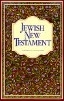
Recently someone asked me about Dr. David Stern's Jewish New Testament translation (which was later appended to the older JPS translation of the Tanakh (1917) to form the "Complete Jewish Bible"). Is it a good translation? Do I recommend it?
|
|
|
|
|
|
Shivim Panim la'Torah (שִׁבְעִים פָּנִים לַתוֹרָה): "The Torah has 70 faces." This phrase is used to indicate different "levels" of interpretation for each pasuk (verse) of the Torah. This brief article explains the meaning behind the dictum and an overview of basic Jewish exegesis.
|
|
|
|
|
|
Many well-meaning Christians get excited over occasional reports that a new Red Heifer has been born, understanding this to be a sign from God that the time to rebuild the Jewish Temple is at hand. But should a Red Heifer be found and later sacrificed, how should we regard this -- especially in light of the Brit Chadashah and its clear teaching that Yeshua is the substance of the what the shadow of the Red Heifer represents?
|
|
|
|
|
|
Traditional Judaism regards circumcision as a "rite of passage" into covenant relationship with the LORD, a type of "giving birth" to a member of Israel, the very family of God. Indeed, according to some of the Jewish sages, being born and circumcised a Jew is sufficient to warrant a place in the world to come. But should a follower of Jesus the Messiah undergo ritual circumcision?
|
|
|
|
Faith of any kind itself must have an object-- whether it is (minimally) the truth status of a proposition or (in more Biblical terms) a positive trust in the character, purposes, and love of the LORD God Almighty....
|
|
|
|
|
|
The phrase "touch not my anointed" is sometimes appealed to as a means of defusing criticism of supposed authority figures within the church. See why such an appeal is fallacious and an example of bad interpretation.
|
|
|
|
|
|
Judaism is not dogmatic regarding eschatological matters, and the various Rabbinic traditions have never reached consensus regarding the issues of life after death and the future state of the world. However, most discussions on the issue include a basic division of the world into two spheres: the Olam Hazeh and the Olam Habah.
|
|
|
|
Was Jesus really born on December 25th, or does Scripture allow us to infer a different time for His advent here on earth? Two arguments are presented here: one for the traditional date of late December, and the other for a date duing the festival of Sukkot.
|
|
|
|
Fear is the "default mode" of the soul that dwells in darkness. This is because the "fallen" soul regards the empirical world and its flux as ultimately real -- and therefore "sees in order to believe." The life of faith, on the other hand, looks beyond the realm of appearances to behold an abiding glory -- and therefore "believes in order to see." How we choose to see is ultimately a spiritual decision for which we are each responsible....
|
|
|
|
|
|
Many people raised in Gentile churches consider the Name of the Lord to be "Jesus" with a surname of "Christ." Although this is based on a misunderstanding, the designation "Jesus Christ" is actually of Jewish origin.
|
|
|
|
A brief article intended to sketch some differences between the typically "Greek" conception of truth and the "Hebraic" conception of truth.
|
|
|
|
A Messianic friend recently remarked to me, "Jews don't need to convert to Christianity; they just need to be "completed," like the Apostle Paul who became a completed Jew." Now what do we make of such a statement?
|
|
|
|
I am sometimes asked whether it is "kosher" for a Christian (or Messianic Jew) to get a tattoo or body art. In addition, I regularly receive email requests from various tattoo artists asking me to give them "the Hebrew lettering for such-and-such a word." It is my hope that this brief article will express my convictions regarding this subject.
|
|
|
|
Popular Christian journalist Joseph Farah (of worldnetdaily) appears to have recently endorsed the policy that the torture and interrogation of POWs is sometimes appropriate - if by so doing the "greater good" is thereby promoted. Read my critique of this position and why I think the underlying sentiment of his viewpoint is fallacious and contrary to the truth of the Scriptures.
|
|
|
|
A Hebrew word translated "folly" is kesilut, perhaps better understood as stupidity (the Greek word used is μωρια). The "wisdom of this world" is ultimately based on fear that leads to the desire to control others. Sometimes, as in the case of warfare, it leads to acts of violence and murder. Human reason designs and schemes in order to obtain its self-serving ends, whereas heavenly wisdom understands that there is no further "end" in sight than that of the LORD Himself and His Presence.
|
|
|
|
|
|
We often feel quite alone with our faith, chaverim. Perhaps this is because Christianity (and Judaism before it) is a confessional faith, that is, there is cognitive (and volitional) content that, once embraced, sets up an endless array of contrary truth claims.
|
|
|
|
|
Many traditional Christian commentators have used the allegory of Hagar and Sarah (Gal. 4:21-31) as a means of rejecting the importance of Torah study for the Christian. It is clear, however, that Paul uses a common midrashic technique to argue that the idea of salvation by the grace of God is in perfect harmony with the writings of Moses.
|
|
|
|
|
|
|
|
If you're a follower of the Messiah Yeshua struggling with the question of whether to become "Torah observant," it is essential for you to seriously consider some of the contrasts between the "old" and "new" covenants as described in the New Testament. By doing so, you will better appreciate the life-transforming differences between the Torah of the New Covenant (given at Zion) with the Torah of the older Covenant (given at Sinai).
|
|
|
|
|
Recently someone asked me what I meant by the term "Greek mindset," especially when used in contradistinction to the term "Hebraic mindset." This is a complicated question, of course, and entire books have been written on the subject. By way of response, however, I wrote the following exploratory article where I attempt to look at a few of the basic distinctions.
|
|
|
|
|
|
Other Articles...
|
|
|
|
The following additional articles you might find helpful. Most of these are from one of my favorite authors, Soren Kierkegaard.
|
|
|
|
An excerpt from Kierkegaard's book "The Sickness Unto Death" that provides an incisive analysis of the modes or ways we choose to embrace our existence. The self is defined as a conscious "synthesis" of the infinite/finite, the temporal/eternal, of freedom/necessity, all in relationship to God, who is the Source and End of self-conscious life. We will be in a state of "despair" when we attempt to deny any one of these paradoxes and thereby choose to understand ourselves apart from relationship with God. We are at the "crossroads" of the eternal and the temporal, and we can only know ourselves for what we are when we surrender to God for each irrepeatable choice of our lives.
|
|
|
|
There are many people who are self-deceived about being on "God's side" in a disagreement or conflict. But how many people understand that God is supremely powerful, the Master of the Universe, and that all that comes to pass occurs soley on the basis of His gratuitous will alone? He is not looking for volunteers to defend the faith or "come to His aid." No, as SK points out, God is looking for those who are willing to "face examination," to come to the end of themselves and their supposed resources, and to "take up the cross" of Jesus.
|
|
|
|
|
|
Worldly wisdom is very willing to deceive by answering correctly the question, "Where is the road?" while life's true task is omitted, that spiritually understood is rather how the road is walked. Worldly sagacity teaches that the road goes over Gerizim, or over Moriah, or that it goes through some science or other, or that the road is certain doctrines, or certain behaviors. But all this is a deception, because the road is how it is walked.
|
|
|
|
|
|
Can there be something in life that has power over us which little by little causes us to forget all that is good? And can this ever happen to anyone who has heard the call of eternity quite clearly and strongly? A brief and provocative essay by Soren Kierkegaard.
|
|
|
|
An article written by Dean VanDruff concerning the popular drift among some Christians to embrace legalistic "Torah Observance" as a supposed step of spiritual maturity. Worth your consideration, especially if you are a Messianic.
|
|
|
|
|
|
We warn young people against going to dens of iniquity, even out of curiosity, because no one knows what might happen. Still more terrible, however, is the danger of going along with the crowd. In truth, there is no place, not even one most disgustingly dedicated to lust and vice, where a human being is more easily corrupted – than in the crowd.
|
|
|
|
Why is it that people prefer to be addressed in groups rather than individually? Is it because conscience is one of life's greatest inconveniences, a knife that cuts too deeply? We prefer to "be part of a group," and to "form a party," for if we are part of a group it means goodnight to conscience. We cannot be two or three, a "Miller Brothers and Company" around a conscience. No, no. The only thing the group secures is the abolition of conscience.
|
|
|
|
|
|
|
|
|
|
There are some people who approach spiritual truth as a subject matter to be mastered, like a schoolboy might study for world history examinations. But as Soren Kierkegaard points out, "truth" does not comprise a set of static facts that may be assimilated, nor does it promote a logical structure to the crisis of present experience. No, "subjective truth," meaning the truth for which one lives and dies, is never approached on such a basis, despite the bluster of those pretenders of knowledge who hail their own conceits on the question.
|
|
|
|
For Kierkegaard, the rule of faith is necessarily antithetical to the canons of reason, since objectifying God or attempting to explain Him in strictly rational terms weakens the radical decision to "walk by faith, not by sight." In this regard, he is far more "Hebraic" in his mindset than other big-name Christian theologians....
Objectivity never leads to certainty, yet our lives demand urgent, irrepeatable choices. As SK says, "Faith is the contradiction between the infinite passion of inwardness and objective uncertainty. In other words, if I apprehend God objectively, I do not have faith; but because I cannot do this, I must have faith." When truth is (objectively) understood as subjectivity it is called a paradox.
|
|
|
|
Kierkegaard used the analogy of a lover's letter written in a foreign language to make the distinction between the often tedious process of translation and the act of reading from the heart... For the lover -- the one for whom the words are addressed -- all the "scholarly preliminaries" of translation are regarded as nothing more than a necessary evil to reach the goal -- that of reading and understanding the question of the lover's message.
|
|
|
|
|
|
"To become a Christian is the ultimate, to want to "understand" Christianity, as if it were some doctrine, is open to suspicion..." This excerpt from Soren's work "Concluding Unscientific Postscript" reminds us that the life of faith as it's own category of existence. Attempting to explain the life of faith using terms from the realm of rational discourse is a means of evading the task at hand: "Follow me..."
|
|
|
|
|
|
Only when a person suffers and wills to learn from what he suffers does he come to know something about himself and about his relationship to God. This is the sign that he is being educated for eternity. Through suffering a person can come to know a great deal about the world – how deceitful and treacherous it is – but all this knowledge is not the schooling of suffering.
|
|
|
|
|
|
|
|
Suppose there was a king who loved a humble maiden and whose heart was unaffected by the wisdom that is so often loudly preached. Let then the harp be tuned. Let the songs of the poets begin. Let everyone be festive, while love celebrates its triumph. For love is overjoyed when it unites equals, but it is triumphant when it makes equal that which was unequal. Let the king's love reign!
|
|
|
|
|
It is easy enough to admire Christ or to regard Yeshua as a "philosopher," but quite another to be so existentially engaged in his message and vision that you actually do what he says!
|
|
|
|























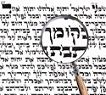

























 (bavat eino), the "pupil of God's eye" (Zechariah 2:8), a term of endearment God uses for no other nation on earth. This short article lists a few of the reasons why the genuine Christian should love and support the physical descendants of Abraham, the Jewish people.