|
Hebrew Lesson
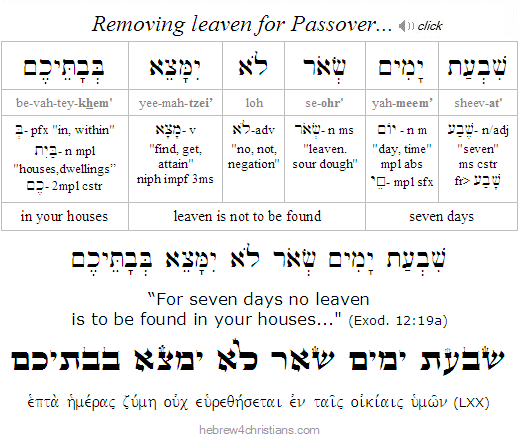
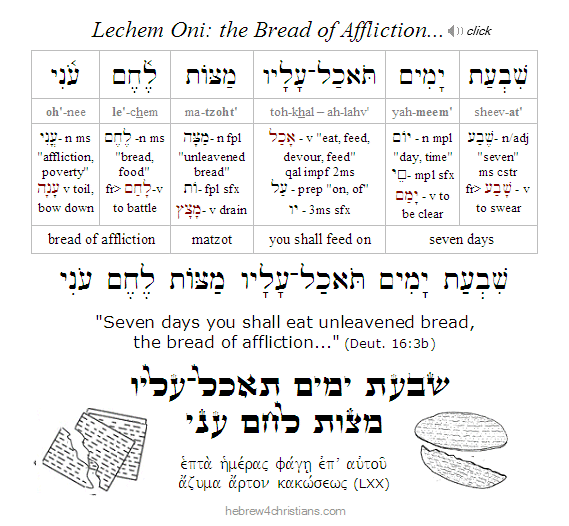
Deut. 16:3b reading (click):
An Application for Christians
In 1 Corinthians 5:6 we read: "Your glorying is not good. Know ye not that a little leaven leavens the whole lump?" Sin has a "leavening" influence upon the soul: you simply cannot include a little sin in your life without it affecting your whole spiritual life. Hidden sin (i.e., hypocrisy) spreads like spiritual corruption throughout the body and will eventually be exposed. As Yeshua said, "Nothing is hidden that will not be made manifest, nor is anything secret that will not be known and come to light" (Luke 8:17).
Cleanse out the old leaven (חָמֵץ) that you may be a new lump, as you really are unleavened. For Messiah, our Passover lamb, has been sacrificed. Let us therefore celebrate the festival, not with the old leaven, the leaven of malice and evil, but with the unleavened bread of sincerity and truth. (1 Cor. 5:7-8)
Note that the Greek uses an imperative verb here (ἐκκαθάρατε): "You cleanse out (i.e., purge, as in catharsis) the old leaven so that you may become a new lump (ἵνα ἦτε νέον φύραμα), since you already are unleavened (ἵνα ἦτε νέον φύραμα) because of what Messiah has done for you." To untangle what this means, it is important to remember that all the "oughts" (i.e., commands) of the New Covenant are are directed to the truth of who you are "in the Messiah," that is, by virtue of His connection to you, and not to your former identity before you were saved. If you belong to Yeshua, you are no longer "known according to the flesh" - since that person has passed away - and now you are a "new creation" (בְּרִיָּה חֲדָשָׁה) with a new nature that is able to serve God (2 Cor 5:16-17). Another way to say this is that the imperatives of the New Covenant are always based on its declaratives; you are able to obey because of who you really are in the Messiah. It is solely out of your union with Him that you are able to please God. This is good news, since it's not up to you to do this; you need only to believe in the miracle....
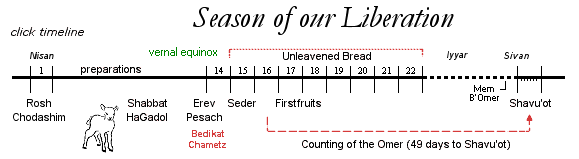
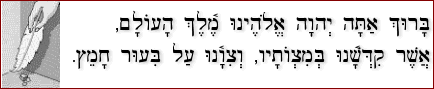
The search for chametz is not unlike the soul searching we do before the fall High Holidays, when we perform chesbon hanefesh (חֶשְׁבּוֹן הַנֶּפֶשׁ) by taking inventory of our spiritual condition before the LORD. In other words, we are commanded to search and remove sources of inner impurity so that we might experience the truth that we are a "new lump" - that is, a new substance that is untainted by the sour and rotting influences of our past lives. Since Yeshua has been sacrificed as your Passover Lamb, you are indeed a new creation (בְּרִיָּה חֲדָשָׁה) and are made "unleavened" by the power of the Holy Spirit (2 Cor. 5:17). Therefore we are likewise commanded put away the "old nature" - the yetzer ha'ra - and purge from your life the old influences that inwardly canker you and make you sick. Walk without hypocrisy in the truth of the love of God for your soul.
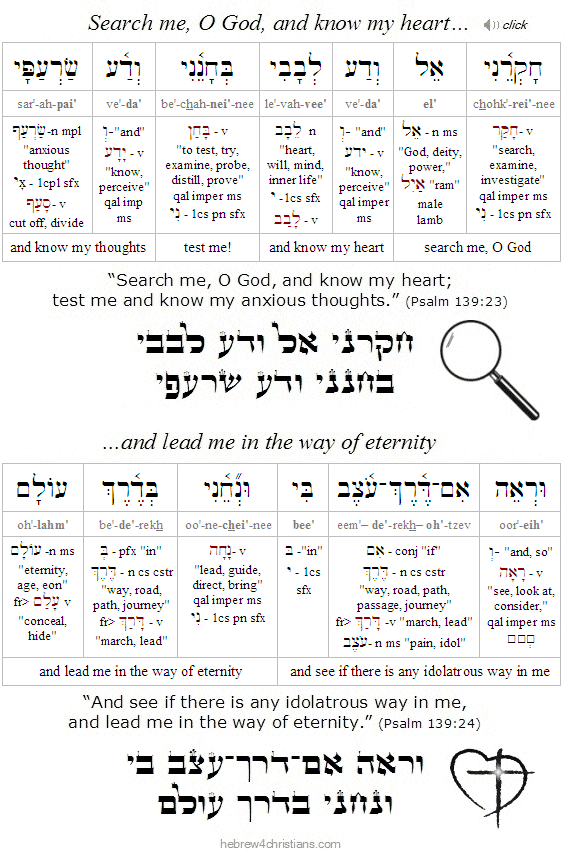
חָקְרֵנִי אֵל וְדַע לְבָבִי
בְּחָנֵנִי וְדַע שַׂרְעַפָּי
וּרְאֵה אִם־דֶּרֶךְ־עצֶב בִּי
וּנְחֵנִי בְּדֶרֶךְ עוֹלָם
chok·rei·nee · el · ve'da · le·va·vee
be·cha·nei·nee · ve'da · sar·a·pai
u·re·eh · eem · de'·rekh · o'·tzev · bee
oo'ne·chei·nee · be·de'·rekh · o·lam

"Search me, O God, and know my heart!
Test me and know my thoughts.
And see if there be any idolatrous way in me,
and lead me in the way everlasting!"
(Psalm 139:23-24)

"For it is you who light my lamp; the LORD my God lightens my darkness" (Prov. 18:28). May it please the LORD to give us the light of His Spirit as we undergo our own inward bedikat chametz to remove the sour and rotting influences of our past lives... Amen.
Related Topics:
Audio Discussions:
|