|
|
 |
|
|
Click on the Parashah name to read the summary:
|
|
|
|
The Mystery of the Red Heifer...
|
|
|
|
Last week's Torah portion (Korach) established the authority of Moses (not Reuben) as the leader of Israel, and the authority of Aaron (not other sons of Levi) as God's chosen priestly line. The Israelites (i.e., laymen) were warned to keep their distance from the priestly duties and to allow the appointed representative of the LORD intercede on their behalf.
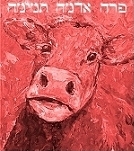
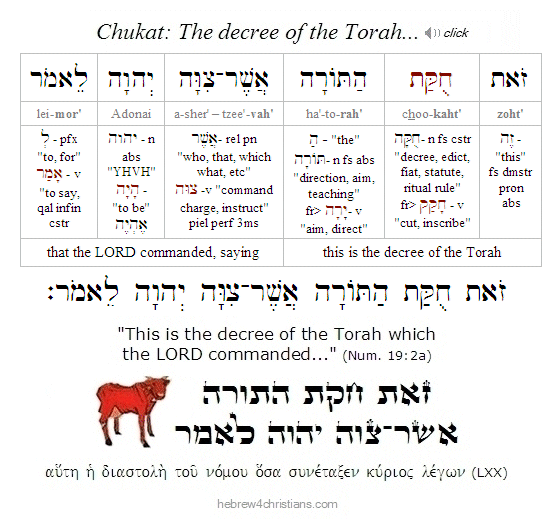
This week we have a "double portion" of Torah and will read both parashat Chukat and Balak... In this the first portion (Chukat), the LORD gives the "law of the red heifer," a special whole-burnt offering whose ashes were used to purify someone contaminated by contact with a dead body. The red heifer had to be a perfect specimen that was completely red, "without blemish, in which there is no defect." The sages interpreted "without blemish" to refer to the cow's color, that is, it was to be without a single white or black hair. This is the only sacrifice in the Torah where the color of the animal is explicitly required. Moreover, the cow was never to have had a yoke upon it, meaning that it must never have been used for any profane purposes.
Unlike other sacrifices offered at the altar at the Tabernacle, the red heifer was taken outside the camp to be slaughtered before the priest, who then took some of its blood and sprinkled it seven times before the Tabernacle. Then the heifer would be burned in its entirety: its hide, flesh, blood, and even dung were to be burned (unlike other sacrifices). Also unlike other offerings, the blood of the sacrifice was to be completely burned in the fire.
Hyssop, scarlet yarn, and a cedar stick would then be thrown upon the burning heifer, which were the same items used to cleanse from tzara'at (skin disease). These items, along with the blood of the red heifer, were therefore assimilated into the ashes of the sacrifice, which were gathered and mixed with living water to create what was called the "waters of separation" for the community. Anyone that came into contact with death (i.e., a corpse) was required to be cleansed using these waters. The purification procedure took a full seven days, using three stalks of hyssop dipped into the water and shaken over the defiled person on the third day and then again on the seventh day. After the second sprinkling, the person was immersed in a mikvah and was declared "clean" the following evening.
The Red Heifer ritual is considered "chok" within the tradition, meaning that it defies rational sense. In fact, the Talmud states that of all the taryag mitzvot (613 commandments), this is the only one that wise King Solomon could not fathom. The mystery of the red heifer sacrifice suggests profound truth about the sacrificial death of Yeshua our Savior, however. The kohen (priest) who sprinkled the ashes of the red heifer became tamei (unclean) himself, even though the defiled person became tahor (pure). The picture of the priest here is one of sacrificial love - the giving up of one's own spiritual purity so that another person can regain his purity... "Sprinkle me with hyssop, and I will be clean" (Psalm 51:7). Just so, Yeshua willingly became unclean on our behalf - through our contact with sin and death - so that we could become clean (Isa. 53:4, 2 Cor. 5:21, Gal. 3:3, Eph. 5:2, Titus 2:14). Because of Yeshua, the impure become pure, even though He became impure through His offering. Because of Him, we have been cleansed from our sins "by a better sprinkling" than that which the Tabernacle of Moses could afford (Matt. 26:28, Heb. 9:14, 12:24, Eph. 1:7, 1 Pet. 1:2,18-19, Rom. 5:9; Col. 1:14, 1 John 1:7, etc.).
 |
|
|
|
|
|
|
|
|
|
|
|
|
|
|
|
|
|
|
|
|
|
|
 |
|
|
|
Overruling the Wicked...
|
|
|
|
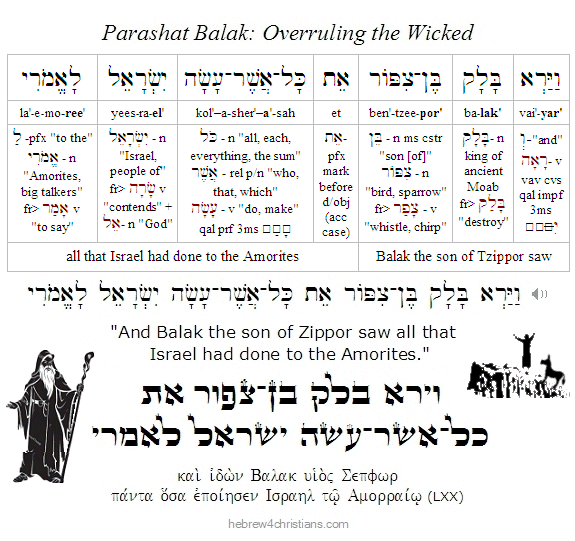
Our second Torah portion this week (Balak) is named after a fretful Moabite king (בָּלָק) who sought to curse the Jewish people by hiring the services of a wicked Midianite "prophet" named Balaam (i.e., bil'am: בִּלְעָם). King Balak's plan was to employ Balaam's sorcery (כַּשָׁפוּת) against the Israelites to prevent them from entering the Promised Land. Similar to the delicious irony that befell the villain Haman in the Book of Esther, however, King Balak's scheme was upended, and the curse he sought to put on the Jewish people was repeatedly pronounced as a blessing by Balaam instead. After several foiled attempts to curse the Israelites, Balak finally dismissed the prophet from his service, but before departing from the dejected king, Balaam ironically prophesied the destruction of the Moabites and the establishment of Israel. The shameful story of Balaam reveals that "there is no enchantment against Jacob, no divination against Israel" (Num. 23:23). Ein od milvado (אֵין עוֹד מִלְבַדּו) - no weapon or scheme devised against God will ever prosper (Isa. 54:15-17). Amen.
But who was this mysterious prophet named Balaam? According to Jewish tradition, Jacob's wicked uncle Laban had a son named Be'or (בְּעוֹר), who became the father of Balaam. In other words, the "cursing prophet" Balaam was none other than the grandson of Laban:
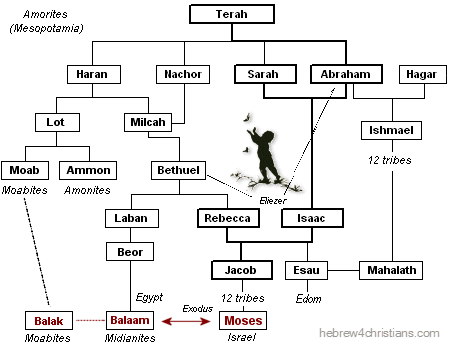 |
Note that the name "Beor" first appears in connection with a king of Edom (Gen. 36:32), which suggests that Balaam might have once been a king of the Edomites (i.e., the descendants of Esau). Further note the phonetic similarity to Peor. If Beor and Peor are the same, then Balaam was actually a prophet of Baal Peor, a local Semitic god.
Balaam was regarded as a great seer, magician and an adept in the occult. He had an "evil eye" and drew the spirit of demons to anything he gazed upon (Avot 5:22). His notoriety made him famous, and powerful people asked him to invoke curses on their enemies. The Talmud (Sanhedrin 106a) states that Balaam became so famous as a magician that he later became a chief advisor to Pharaoh. It was Balaam who advised the new Pharaoh to enslave the Israelites and to afflict them with brutal taskmasters (Exod. 1:8-11). For more information about the identity of Balaam, see the entry entitled, "The Curses of Balaam."
|
|
|
|
|
|
|
The Fast of the Fourth Month
|
|
|
|
According to Jewish tradition Moses shattered the tablets on the 17th day of the 4th month, after he came down from Sinai and found the people worshipping the golden calf. Today, this tragic date is commemorated as a fast day (i.e., the "Fast of Tammuz"), which marks the beginning of a three week period of mourning that culminates on Tishah B'Av (i.e., the date when the people tragically believed the evil report of the spies and were sent into exile).
During this three week period of national mourning, the weekly readings from the prophets are all "Haftarahs of Rebuke" that warn the people about imminent judgment from heaven, and therefore the theme of most Jewish religious services is teshuvah (repentance). In addition, weddings or other joyous events are usually not held during this time of year. Indeed, among the very Orthodox, the last nine days of the three weeks are the most rigorous and solemn. Beginning on the first day of the month of Av, traditional mourning customs are practiced in anticipation of the most solemn fast day of Tishah B'Av, when the Book of Lamentations (Megillat Eichah) is plaintively recited during the evening service.
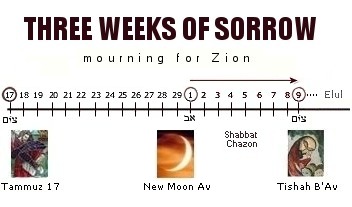 |
This year the Fast of Tammuz begins at dawn Thursday, July 2nd and lasts until sunset. The Tishah B'Av fast therefore begins three weeks later at sundown on Wed., July 22nd and ends after sunset on Thurs., July 23rd.
|
|
|
|
Blessing before Torah Study:
|
|
|
|
 |
|
|
|
|
|
|
|
Some terms:
|
|
|
|
- Parashah is the weekly Scripture portion taken from the Torah. Each parashah is given a name and is usually referred to as "parashat - name" (e.g., parashat Noach). For more information about weekly readings, click here.
- Aliyot refer to a smaller sections of the weekly parashah that are assigned to people of the congregation for public reading during the Torah Reading service. In most congregations it is customary for the person "called up" to recite a blessing for the Torah before and after the assigned section is recited by the cantor. For Shabbat services, there are seven aliyot (and a concluding portion called a maftir). The person who is called to make aliyah is referred to as an oleh (olah, if female).
- Maftir refers to the last Torah aliyah of the Torah chanting service (normally a brief repetition of the 7th aliyah, though on holidays the Maftir portion usually focuses on the Holiday as described in the Torah). The person who recites the Maftir blessing also recites the blessing over the Haftarah portion.
- Haftarah refers to an additional portion from the Nevi'im (Prophets) read after the weekly Torah portion. The person who made the maftir blessing also recites the blessing for the Haftarah, and may even read the Haftarah before the congregation.
- Brit Chadashah refers to New Testament readings which are added to the traditional Torah Reading cycle. Often blessings over the Brit Chadashah are recited before and after the readings.
- Mei Ketuvim refers to a portion read from the Ketuvim, or writings in the Tanakh. Readings from the Ketuvim are usually reserved for Jewish holidays at the synagogue.
- Perek Yomi Tehillim refers to the daily portion of psalms (mizmorim) recited so that the entire book of Psalms (Tehillim) is read through in a month. For a schedule, of daily Psalm readings, click here.
- Gelilah refers to the tying up and covering the Sefer Torah (Torah Scroll) as an honor in the synagogue.
- Divrei Torah ("words of Torah") refers to a commentary, a sermon, or devotional on the Torah portion of the week.
|
|
|
|
 |
|
|
|
Related Topics:
|
|
|
|
|
|
|
|
<< Return
|
|
|
|
Hebrew for Christians
Copyright © John J. Parsons
All rights reserved.
|
|
|
|
 |
|
|
|
|
|
|