 |
|
|
|
|
|||||||||||||||||
 |
|||||||||||||||||||||
|
|||||||||||||||||||||
 |
|||||||||||||||||||||
|
Learn Hebrew |
|||||||||||||||||||||
















|
|
||
 |
|||
 |
|||
|
|
 |
|
|
||||||||||||||||||||||||||||
|
|
 |
|
|
 |
|
|
|
Return, faithless Israel, declares the LORD. I will not look on you in anger, for I am merciful, |
|
|
|
The Call to do Teshuvah... |
|
|
|
|
|
The Background at Sinai... |
|
|
|
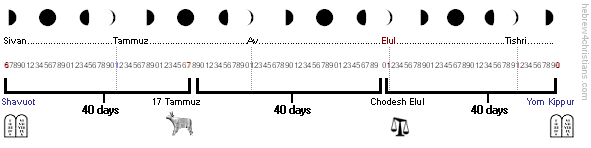
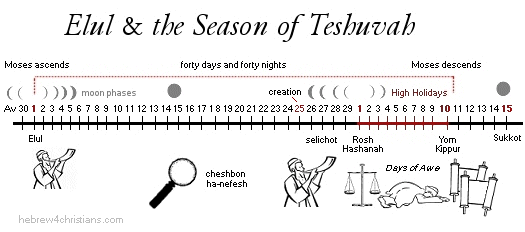
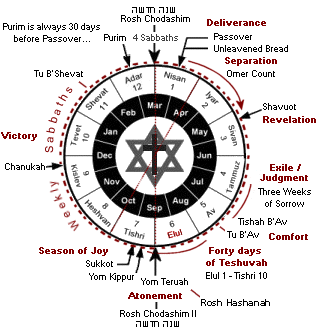
Every year the "Season of Teshuvah" runs forty days from the first day of the Hebrew month of Elul to Yom Kippur. During this time we make every effort to repent, or "turn [shuv] toward God." In Jewish tradition, these 40 days are called Yemei Ratzon (יְמֵי רָצוֹן) - "Days of Favor," since it was during this time that the LORD forgave the Jewish nation after the sin of the Golden Calf (Pirke d'Reb Eliezar). Some have likened these 40 days to the number of weeks it takes for the human fetus to be formed within the womb. Teshuvah is a sort of death and rebirth: a death of the past life and the birth of a new life and a new creation (2 Cor. 5:17). It is an awakening from the sleep induced by sin, and manifests itself as the power of the Holy Spirit working in the heart of the believer who trusts in God's salvation through Yeshua. Therefore the Ruach HaKodesh gives us spiritual life that enables us to be "conformed" (i.e., σύμμορφος, "formed together") with Yeshua's purpose (ratzon) in this world (Rom. 8:28-30). God's Favor is most fully revealed in the character (χαρακτὴρ) of His Son (Heb. 1:3). |
|
|
|
|
|
Forty Days of Teshuvah... |
|||
|
According to Jewish tradition, then, the month of Elul represents the time that Moses spent on Sinai preparing the second set of tablets after the idolatrous incident of the Golden Calf. Moses ascended on Rosh Chodesh Elul ("Head of the Month of Elul") and then descended 40 days later on the 10th of Tishri, the end of Yom Kippur, when the repentance of the people was complete. The month of Elul therefore represents the time of national sin and forgiveness obtained by means of teshuvah before the LORD.
Note: On the Torah's lunar calendar, Rosh Chodesh Elul is observed for two days, on the 30th of Av and again on Elul 1. The reason for this is that the sages decided that when an ending month is 29 days long, Rosh Chodesh of the new month will be celebrated for just one day, namely, the first day of the new month; however, when the preceding month has 30 days (as it does in the case of the month of Av), then Rosh Chodesh of the new month will be celebrated for two days. In this case, both the 30th day of the preceding month and the first day of the new month will be called Rosh Chodesh (as it is in the case of the month of Elul). At any rate, it is customary to observe the 29 days of Elul as a time of "soul searching," or cheshbon hanefesh (חֶשְׁבּוֹן הַנֶּפֶשׁ), and offering prayers for forgiveness (selichot) in anticipation of the Ten High Holy Days. The appointed season of teshuvah (repentance) therefore runs 40 days from the last day of the month of Av to erev Yom Kippur. When in doubt of dates, always consult a kosher calendar! |
|||
|
Listening to the Shofar... |
|||
|
|
|
Beginning on Rosh Chodesh Elul and continuing until the day before Rosh Hashanah, it is customary to blow the ram's horn (i.e., shofar: שׁוֹפָר) every day (except for Shabbat). This practice was adopted to awaken us for the coming High Holidays. |
|
|
||||||||||||||||||||||||||
|
|
|
The Theme of Repentance... |
|
|
|
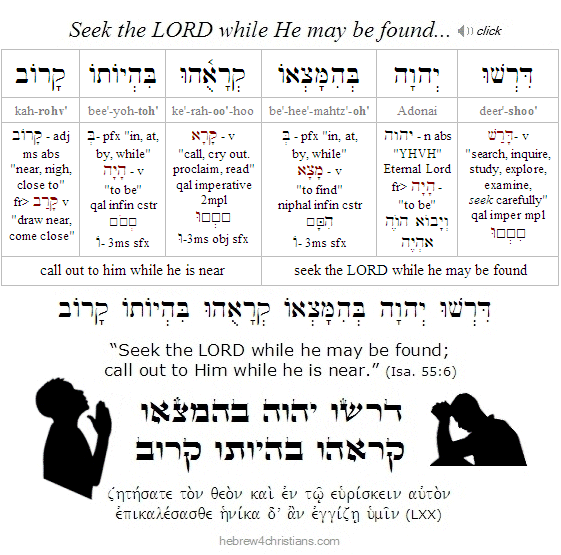
The following appeal from the prophet Isaiah is considered thematic for this season: דִּרְשׁוּ יְהוָה בְּהִמָּצְאוֹ deer·shoo Adonai be·hee·matz·oh Seek the LORD while he may be found; The passage continues: "Let the wicked man forsake his way (i.e, derekh: דֶּרֶךְ), and the perverse man his thoughts (i.e., machshavah: מַחֲשָׁבָה); and let him return (i.e., shuv: שׁוּב) to the LORD, that He may have compassion (i.e., rachamim: רַחֲמִים) on him, and to our God, for he will abundantly pardon (i.e., selichah: סְלִיחָה)" (Isa. 55:7). |

|
|
|
|
|
|
About the name "Elul"... |
||||
|
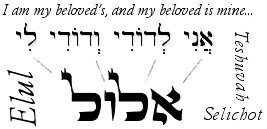
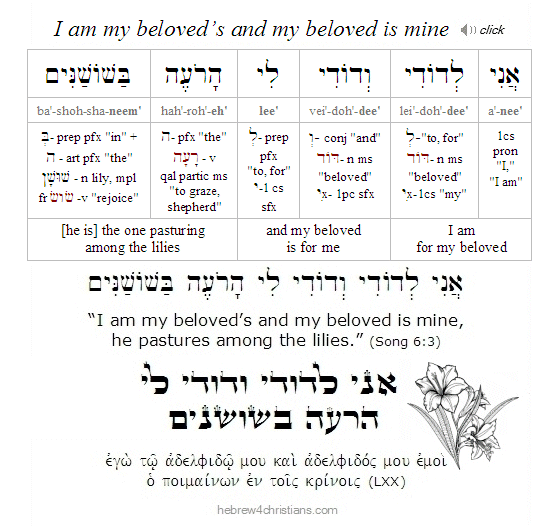
In the Torah, the month of Elul is simply called the sixth month of the Jewish year. The name "Elul" (אֱלוּל) was "imported" by the Jews after their 70 year exile in Babylon (it is thought to originally come from an Akkadian word meaning "harvest"). Some commentators note that the word may also come from the root of the verb "search" in Aramaic, thus implying that this month should a time of soul-searching or "cheshbon ha-nefesh" (חֶשְׁבּוֹן הַנֶּפֶשׁ). אֲנִי לְדוֹדִי וְדוֹדִי לִי a·nee · le·doh·dee · ve·doh·dee · lee "I am my beloved's and my beloved is mine" (Song 6:3) Note that the end of each letter in this phrase is a Yod (י), which has the numeric value of 10, so the phrase itself can be combined to the number 40, reminding us of the forty days of teshuvah that lead up to Yom Kippur. |
||||
 |
||||
|
The High Holidays Psalm... |
||||
|
|
|
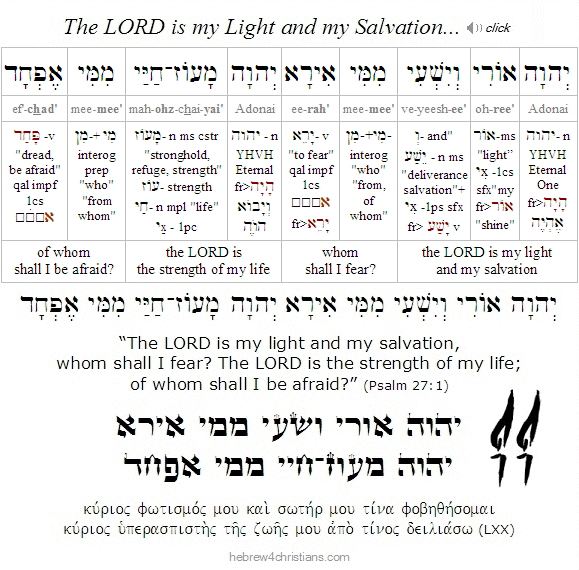
It is an old custom to read (or to sing) the Book of Psalms during the month of Elul. In the famous Song of Moses, it is written: וַיּאמְרוּ לֵאמר אָשִׁירָה לַיהוָה / "and they spoke, saying: 'I will sing to the LORD' (Exod. 15:1). This phrase can be formed into an acronym for Elul, and the sages therefore reasoned that hearing the Psalms were vital during the Season of Repentance and Days of Favor. יְהוָה אוֹרִי וְיִשְׁעִי מִמִּי אִירָא Adonai · oh·ree · ve·yeesh·ee · mee·mee · ee·ra "The LORD is my light and my salvation; whom shall I fear? Finally, Psalm 27:13 contains a textual oddity. It is often translated: "Unless I had believed to see the goodness of the Lord in the land of the living." The word often translated "unless" is lulei (לוּלֵא), which read backwards spells Elul (אלול). This is said to suggest that salvation comes from faith that sees the goodness of the LORD. Repentance is only really possible if we believe in the goodness and love of the Lord "in the land of the living." |
|
|
|
|
|
|
|
|
|
|
|
|
|
|
|
|
|
|||
|
Selichot Services... |
|||||||||||||||||||
|
The Hebrew word selichah (סְלִיחָה) colloquially means "forgiveness," though in the Hebrew Scriptures it refers exclusively to God's offer of pardon and forgiveness of the repentant sinner. For instance, in Psalm 130:4 we read, "But with you there is forgiveness (selichah), that you may be feared" (כִּי־עִמְּךָ הַסְּלִיחָה לְמַעַן תִּוָּרֵא).
In Sephardic tradition, Selichot services begin at the start of Elul and run until Yom Kippur (similar to the 40 days Moses spent on Mount Sinai), though in the Ashkenazic tradition they are recited late (i.e., midnight) on the Saturday night before Rosh Hashanah. Some of the prayers and music for the Selichot service are taken from the services for Rosh Hashanah and Yom Kippur, providing a transition between the "old year" and the New Year. A Chassidic tradition holds that the last twelve days of the year (i.e., Elul 18 to 29) correspond to the twelve months of the closing year: on each of these twelve days, the pentitent should review the deeds and achievements of its corresponding month. |
|||||||||||||||||||
|
|
|||||||||||||||||||
|
Appealing to God's Compassion... |
|||||||||||||||||||
|
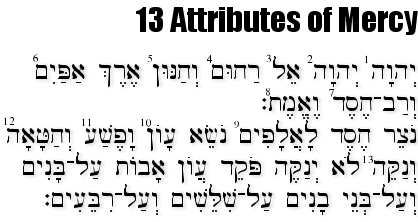
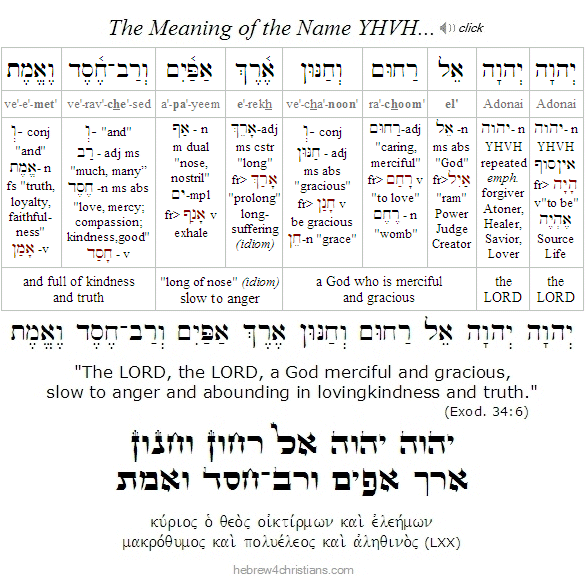
After the Jews had committed the grievous sin with the Golden Calf, Moses despaired of the Jews ever being able to find favor in God's eyes again. God, however (as explained in the Talmud (Tractate Rosh Hashanah 17b)) donned a tallit, and, in the role of a chazzan, showed Moses the order of the Thirteen Attributes of Mercy, called Shelosh Esrei Middot. In the synagogue, the "Selichot service" is built upon a recitation of these thirteen merciful attributes that the LORD revealed (see Exodus 34:6-7): |
|||||||||||||||||||
 |
|||||||||||||||||||
 |
|||||||||||||||||||
|
"The LORD, The LORD God, merciful and gracious, longsuffering, According to various traditional interpretations, these thirteen attributes of God's Name may be understood as follows:
In addition to the Shelosh Esrei Middot, the chanting of a number of psalms and prayerful poems (piyyutim) are recited during services throughout the month of Elul. The tone of a Selichot service is set in Psalm 130: "Out of the depths have I cried unto thee, O LORD. Lord, hear my voice: let thine ears be attentive to the voice of my supplications. If thou, LORD, shouldest mark iniquities, O Lord, who shall stand? But there is forgiveness with thee, that thou mayest be feared." As Messianic believers, we affirm that forgiveness is obtained by exercising emunah (faith) in the sacrifice of Yeshua as the kapparah for our sins, and by evidencing wholehearted teshuvah in our daily life. In Rabbinic Judaism, however, Selichot are said as a means of rendering a favorable verdict of "din," or "judgment" by God during the Days of Awe. |
|||||||||||||||||||
 |
|||||||||||||||||||
|
|||||||||||||||||||
 |
|||||||||||||||||||
|
Micah and the Attributes of Mercy... |
|||||||||||||||||||
|
In reference to the Name El (אֵל), the prophet Micah does not refer to the One "who made heaven and earth, the sea and all that is in it" (Exod. 20:11) nor to the One "who counts the number of the stars and calls them all by name" (Psalm 147:4), etc., but rather to the One who forgives and who delights to restore what is broken by means of His mercy and love. The work of redemption is greater even than the work of creation. מִי־אֵל כָּמוֹךָ mee-El ·kah·moh·khah "Who is a God like you, Like the first redemption of Israel out of Egypt, where the LORD was exalted above all so-called gods, in the future deliverance (of ethnic Israel) God reveals His grace and compassion, which is the grace of the gospel of Yeshua the Messiah when the remnant of Israel shall be saved at the End of the Age. Note that the words here resemble the thirteen attributes of mercy given in Exod. 34:6-7, which reveal the meaning of the Name YHVH after the dreadful sin of the golden calf... In the same way, ethnic Israel will come to understand the love and forgiveness of God given in the gospel after the long period of spiritual exile. |
|||||||||||||||||||
|
How to do Teshuvah? |
|||||||||||||||||||
|
The theme of the Jewish High Holidays is teshuvah (תְּשׁוּבָה), a word often translated as "repentance," though it's more accurately understood as turning back (shuv) to God. The root of this verb occurs nearly 1,000 times in the Hebrew Scriptures and first occurs when God told Adam he would "return to the earth" (Gen. 3:19). In spiritual terms, shuv may be regarded as both a turning away from evil and a turning toward the good, though Jewish thinking regards turning to God as the means by which we turn away from evil. This act of turning has the power to redirect a person's destiny. It effects the whole life of the soul. As Abraham Heschel wrote, "No word is God's final word. Judgment, far from being absolute, is conditional. A change in man's conduct brings about a change in God's judgment" (Heschel: The Prophets, 194). In the ancient Greek translation of the Jewish Scriptures (i.e., the Septuagint, or LXX), shuv is translated using the word strepho (στρέφω), which means to turn around, or to turn back to God.
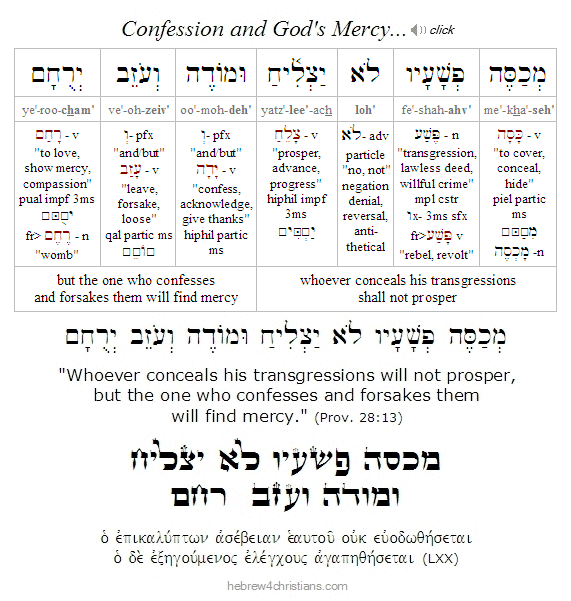
Finally, it needs to be said that authentic repentance is a lifestyle, not a "one time deal." We never get past it. Although there is certainly spiritual progress as we walk in grace, all genuine progress comes through ongoing teshuvah. We may repent from a certain action at a given point in time, but that does not mean that no longer need to do teshuvah. Teshuvah is perpetual and timeless, since it corresponds to our spiritual lives rather than our temporal lives. Indeed, a true penitent is called baal teshuvah (בַּעַל תְשׁוּבָה), a "master of returning," who is always turning away from self and toward God. We never get beyond the call to "repent and believe the gospel" (Mark 1:15). That is why the season of teshuvah is always timely. The message of Elul and the High Holidays is meant to be carried over throughout the rest of the year. מְכַסֶּה פְשָׁעָיו לא יַצְלִיחַ me·khas·seh · fe·shah·av · loh · yatz·lee·ach "Whoever conceals his transgressions will not prosper, |
|||||||||||||||||||
|
Turning, Turning, Turning... |
|||||||||||||||||||

|
|
|
So how do we prepare for Rosh Hashanah? Traditionally we prepare through three types of turning: 1) turning to God (offering tefillah); 2) turning to others we've harmed or offended (asking for mechilah), and 3) turning to those in need (giving tzedakah). In all three cases we can genuinely return to God only by choosing to embrace the truth about our lives. |
|
|
 |
|
|
|
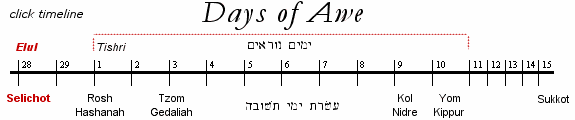
The month of Elul is the month set apart for repentance, or teshuvah, in spiritual preparation for the High Holidays (i.e., Rosh Hashanah and Yom Kippur). The "Season of Teshuvah" runs forty days from the first of Elul to Yom Kippur. Each day the shofar is sounded we appeal to the LORD for the gift of genuine repentance in our lives. The last ten days of this 40 day period (beginning on Rosh Hashanah and ending on Yom Kippur) are referred to as the "High Holy Days" or the "Days of Awe" (Yamim Nora'im). |

|
|
 |
|
|
||||||||||||||||||||||||||

|
|

|
|
|
|
|
|
|
|
|
|
|||||||
|
Hebrew for Christians |
|||||||
 |
|||||||
|
|||||||