|
|
 |
|
|
Traditional Judaism defines a "special Sabbath" as one that precedes (or coincides with) a Jewish holiday during the calendar year. Usually these Sabbaths include an additional Torah or Haftarah reading that either replaces the standard weekly reading or is read in addition to it (i.e., maftir: מפטיר). The additional reading often reflects the holiday's theme and is normally read from a different Torah scroll.
|
|
|
|
The Four Sabbaths before Passover
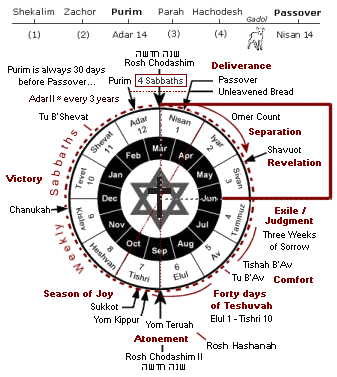
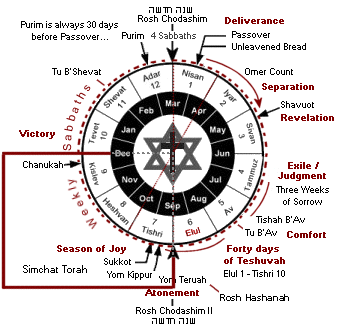
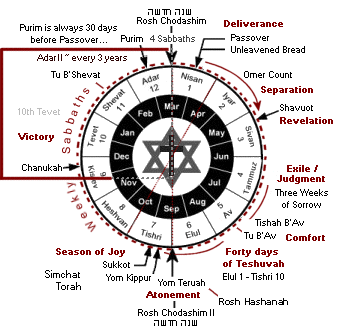
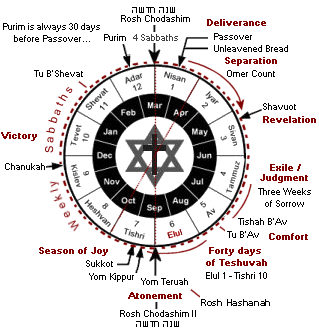
Four special Sabbaths occur just before the start of Spring: two before Purim and two before Passover. Collectively, these four Sabbaths are called "The Four Shabbatot" and additional Torah readings (Arba Parashiyot - four Torah portions) are read that connect with the two holidays. The names of these Sabbaths are Shabbat Shekalim, Shabbat Zakhor, Shabbat Parah, and Shabbat HaChodesh. (In addition, the Sabbath immediately preceding Passover is called Shabbat HaGadol.)
1. Shabbat Shekalim
"The rich shall not give more, and the poor shall not give less..." (Exod. 30:15)

(shab-baht she-ka-LEEM) שַׁבַּת שְׁקָלִים / "Sabbath of the Shekels." Read on Sabbath on or before the 1st of Adar (or Adar II during leap years). The Maftir (additional reading) from Exodus (30:11-16) describes the census of every Jew and the obligation to give a half-shekel terumah (contribution) during the month of Adar to pay for the public korbanot (sacrifices) offered in the Bet Hamikdash (Temple) in Jerusalem. According to a midrash in the Talmud (Bavli, Shekalim 1), the half-shekel represents a "fiery coin" that the LORD brought from underneath the Throne of His Glory to symbolically "atone" for the sin of the Golden Calf. Since every Jew was required to give this "widow's mite," repentance is accepted for all who come in true humilty before the LORD. For us, it might be a time to remember those who make personal sacrifices so we might draw closer to God...
2. Shabbat Zakhor
"Remember what Amalek did to you..." (Deut. 25:17-19)

(shab-baht zah-KHOR) שַׁבַּת זָכוֹר / "Sabbath of Remembrance." The Shabbat that precedes Purim is called Shabbat Zakhor - the "Sabbath of remembrance." The Maftir (additional reading) is Deuteronomy 25:17-19 describing the attack by Amalek and calling for us to "Remember what Amalek did to you" (זָכוֹר אֵת אֲשֶׁר־עָשָׂה לְךָ עֲמָלֵק בַּדֶּרֶךְ בְּצֵאתְכֶם מִמִּצְרָיִם). The Haftarah (1 Sam. 15:2-34) also speaks of Amalek. These readings were selected before Purim because Haman was an Agagite, i.e., a descendant of Amalek (Esther 3:1). For more information about this Sabbath, click here.
3. Shabbat Parah
"This is the ordinance of the Torah which the Lord has commanded" (Num. 19:2)

(shab-baht pah-RAH) שַׁבַּת פָּרָה / "Sabbath of the Red Cow." On the Shabbat after Purim, in addition to the weekly Torah portion, the chapter of Parah Adumah, the Red Cow (or Red Heifer), is read. "This is the ordinance of the Torah which the Lord has commanded" (Num. 19:1-22).
The Red Heifer offering is considered a paradox to most Jewish thinkers. The paradox is that the one who offers this sacrifice becomes ritually impure, while the sprinkling of the ashes is used to make people clean. This ritual is considered chok within the Jewish tradition, meaning that it makes no rational sense. In fact, the Talmud states that of all the taryag mitzvot (613 commandments), this is the only one that King Solomon could not fathom, since this sacrifice is the most paradoxical of all the sacrifices found in the Torah. The sacrifice of Yeshua the Messiah is the fulfillment of the symbolism of the parah adumah. Both were entirely rare and without defect (sin); both were sacrificed outside the camp; both made the one who offered the sacrifice unclean but made the one who was sprinkled by it clean; and finally, both sacrifices cleanse people for priestly service.
For more information about this Sabbath, click here.
4. Shabbat HaChodesh
"This month is for you the first of months..." (Exod. 12:2)

(shab-baht ha-KHOH-desh) שַׁבַּת הַחדֶשׁ / "Sabbath of the Month." On the Shabbat before the month of Passover begins (Rosh Chodashim), an additional Torah reading (maftir) concerning the sanctification of the New Moon is read (Exod. 12:1-20). The New Moon of Nisan is perhaps the most significant of the "new moons" of the Jewish calendar, since it is the first month of the Biblical Calendar - and therefore represents the Biblical "New Year's Day." Note that any Shabbat that precedes a new Hebrew month (i.e., Rosh Chodesh) is known as Shabbat Mevarchim (mevarchim means "they [the congregation] bless" the forthcoming new month").
Originally Rosh Chodashim was simply called the "First month" because it is the month of the Exodus and the other months were named in relation to it, similar to the days of the week in the Hebrew calendar (i.e., the first day, the second day...). Later it was called "Chodesh Ha-Aviv" (חדֶשׁ הָאָבִיב), the springtime month, because the Jewish calendar is reset in the spring. According to the sages, after the Babylonian Exile and the prophecy of Jeremiah was fulfilled (i.e., "it will no longer be said 'as the LORD lives, who took the people of Israel out of Egypt,' rather it will be said 'as the LORD lives, who raised up and brought the people of Israel from the Northern Land' (Jer. 16:14-15), the Jews began to call the months by the names commonly used in exile as a commemoration of God's faithfulness.
For more information about this Sabbath, click here.
Immediately Preceding Passover:
5. Shabbat HaGadol
"Behold, I will send you Elijah the prophet before the coming of the great and dreadful day of the Lord." (Mal. 3:23)

(shab-baht ha-gah-DOHL) "The Great Sabbath"; the Sabbath immediately before the festival of Pesach (Passover), in commemoration of the time when the first generation set aside the Pascal lamb. The additional (musaf) is from Malachi 3. Note that a Sabbath that occurs during the "intermediate days" of Passover (and Sukkot) is known as Shabbat Chol HaMoed - "the Shabbat [of the] intermediate days." The regular weekly Torah portion is not read on this Sabbath but readings based on the holiday are recited instead.
According to the Talmud, the Exodus from Egypt occurred on Thursday, Nisan 15th, thus making the 10th of that month a Shabbat. It was on this great Shabbat that the LORD commanded the families of Israel to obtain a lamb for sacrifice and to bring it to their homes. This was to be Korban Pesach - the Passover lamb - to be sacrificed on Nisan 14th.
One of the major Egyptian gods was the sheep (or the ram god Amun), so this Shabbat is also considered "gadol" (great) because God miraculously allowed the Israelites to take lambs from among the Egyptians despite the humiliation of their deity (Orach Chaim 430:1). According to midrash, the Israelites explained that they intended to sacrifice these lambs by the LORD's command, who would then destroy the firstborn of Egypt. When the Egyptian firstborn heard this they begged their fathers to let the Israelites go, but their cries were ignored until a civil war broke out in which many Egyptians were killed (Tosafot Shabbat 87b). This internecine warfare is called the "War of the Firsborn" and is considered a great miracle that helped deliver the Israelites from slavery in Egypt.
Shabbat HaGadol foreshadowed the offering of the Mashiach Yeshua as Seh Elohim, the Lamb of God, who takes away the sins of the world. The Haftarah for Shabbat HaGadol (Malachi 3:4-24) foretells of Yom Adonai and the return of Yeshua as Mashiach ben David. For more information, click here.
Shabbat HaGadol is traditionally one of two times during the year that a noted Torah sage addresses the congregation (usually regarding the laws of Passover). The other occasion is Shabbat Shuvah -- the Sabbath of Repentance -- between Rosh Hashanah and Yom Kippur.
For more information about this Sabbath, click here.
|
|
|
|
|
|
|
|
|
|
|
|
 |
|
|
|
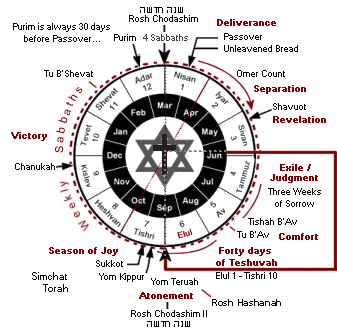
Special Sabbaths of Summer
|
|
|
|
 |
|
|
|
 |
|
|
|
|
|
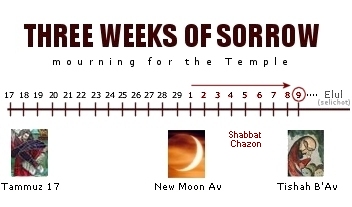
In synagogue services the order of the Haftarot (readings from the Nevi'im, or prophetic writings) usually follow the Torah reading for the week. However, beginning with the Three Weeks of Sorrow (late summer) until after the Fall High Holidays, these readings change. First are three haftarot of punishment (leading up to Tishah B'Av), then seven of consolation (for the seven weeks until Rosh Hashanah), and finally one of repentance (on Shabbat Shuvah, the Sabbath before Yom Kippur).
1. Shabbat Chazon
"And when ye spread forth your hands, I will hide mine eyes from you: yea, when ye make many prayers, I will not hear: your hands are full of blood." (Isa. 1:15)

(shab-baht kha-ZOHN) שַׁבַּת חֲזוֹן / "The Sabbath of Vision." The Sabbath preceding the Fast of Av (Tishah B'Av) during the Three Weeks of Sorrow is called Chazon ("vision"). The Haftarah reading is from the first chapter of Isaiah (1:1-27) that reveals the coming destruction of the Temple. It is common during this time to confess the sins in our lives that likewise contribute to the lack of God's Presence in our midst.
2. Shabbat Nachamu
"Nachamu, Nachamu ami - be comforted, be comforted, my people..." (Isa. 40)

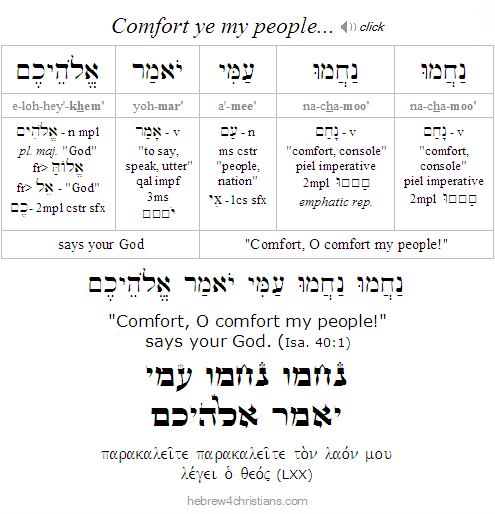
(shab-baht na-kha-MOO) שַׁבַּת נַחֲמוּ / "The Sabbath of Comfort." The Sabbath immediately following Tishah B'Av (the Ninth of Av) is called שבת נחמו (Shabbat Nachamu - the "Sabbath of Comfort"), based on the Haftarah reading (Isaiah 40:1-27) that begins: נַחֲמוּ נַחֲמוּ עַמִּי - Nachamu, Nachamu ami - be comforted, be comforted, my people..." The sages state that the word Nachamu is repeated to offer consolation for each of the Temples that were destroyed.
 |
2. Shabbat Va'Tomer
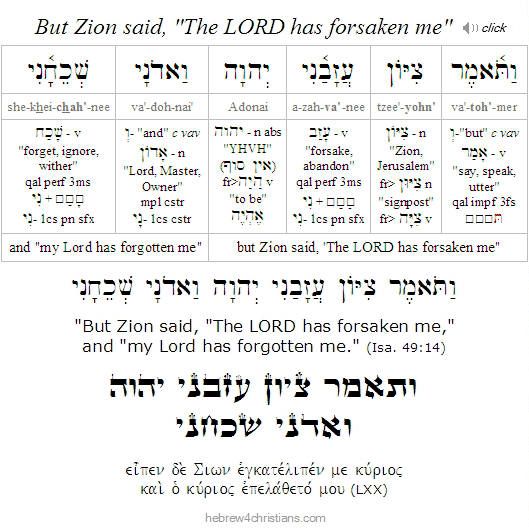
"But Zion said, 'The LORD has forsaken me; my Lord has forgotten me" (Isa. 49:14).
The second of the "Seven Weeks of Comfort" leading up to Rosh Hashanah is called Va'tomer Tzioyn (וַתּאמֶר צִיּוֹן, "But Tzion said..."), which reminds us to never to lose hope for the heavenly future of Zion (Jerusalem).... "Can a woman forget her nursing child, that she should have no compassion on the son of her womb? Even these may forget, yet I will not forget you. Behold, I have engraved you on the palms of my hands; your walls are continually before me" (Isa. 49:15-16). The Haftarah concludes by Isaiah saying that the LORD will comfort the Mountain of Zion by making it like the Garden of Eden, with joy and happiness within her, along with thanksgiving and the sound of song.
|
|
|
The Last Ten Sabbaths of the Year
|
|
|
|
|
The weekly haftarah portion (i.e., reading from the Prophets) is usually thematically connected with the weekly Torah portion; however, beginning with the 17th of Tammuz until the end of the Jewish year, the connection changes. First we always read three prophetic portions of rebuke leading up to the fast day of Tishah B'Av.
Three Weeks of Sorrow:
- Divrei Yirmiyahu ("The words of Jeremiah...") - Jer. 1:1–2:3
- Shim'u Devar Adonai ("Hear the word of the LORD") - Jer. 2:4–28; 4:1–2
- Chazon Yeshayahu ("The vision of Isaiah...") - Isa. 1:1–27
After the fast of Av, however, and for the next seven weeks leading up to Rosh Hashanah (i.e., the new year), we read selections of comfort that foretell of the future redemption of the Jewish people and the coming Messianic Era.
Seven Weeks of Comfort:
- Nachamu, Nachamu Ammi ("Comfort, comfort, my people") - Isa. 40:1–26
- Va'tomer Tziyon ("But Zion said...") - Isa. 49:14-51:3
- Aniyah So'arah ("O afflicted and storm-tossed") - Isa. 54:11–55:5
- Anochi, Anochi hu ("I, even I am He...") - Isa. 51:12–52:12
- Rani Akarah ("Sing, O Barren one...") - Isa. 54:1–10
- Kumi Ori ("Arise and shine..." - Isa. 60:1–22
- Sos Asis ("I will greatly rejoice...") - Isa. 61:10–63:9
|
|
|
|
"The Lord is my strength and song, and he is become my salvation." (Exod. 15:2)
1. Shabbat Chanukah

(shab-baht cha-noo-KAH) שַׁבַּת חֲנֻכָּה / "The Sabbath of Chanukah." It is marked by an added Torah reading for the festival. If this Sabbath coincides with Rosh Chodesh Tevet, additional readings are recited for the New Moon.
2. Shabbat Shirah

(shab-baht shee-RAH) שַׁבַּת שִׁירָה / "The Sabbath of the Song." When the Torah reading for the week is parashat Beshalach (usually in Shevat/late winter), the famous Shirat Hayam, the "Song the Sea," is chanted at services. This is a hymn of praise the Israelites sang after they crossed the Sea of Reeds (i.e., Yam Suf: יָם סּוּף) and the Shabbat has therefore come to be called Shabbat Shirah ("Sabbath of the Song").
Shirat Hayam begins: "I will sing to Adonai, for he has triumphed gloriously; the horse and his rider he has thrown into the sea. The Lord is my strength and song, and he is become my salvation" / עָזִּי וְזִמְרָת יָהּ וַיְהִי־לִי לִישׁוּעָה (Exod. 15:1-2). Shirat Hayam is also sung on the 7th day of Passover, as a memorial of the deliverance by God through the waters of the Sea of Reeds.
The Hebrew text is stylized in different ways according to different soferut (scribal) traditions. The sages count 198 words in this song, which is the numerical value for the word tzchok (צחק), a word that means "laughter" and is the word used to describe Sarah's response when she finally gave birth to Isaac (Gen. 21:6). According to Rabbi Bahye, the laughter in Isaac's name comes from Abraham's joy (Gen. 17:17). The joy of Isaac's birth, then, is linked with the "birth" of the nation of Israel at the time of the Exodus.
Note: Orthodox Jews try to chant Shirat Hayam every day (i.e., during morning services) to fulfill the commandment to "remember the day of your departure from the land of Egypt all the days of your life" (Deut. 16:3).
|
|
|
|
|
|
|
|
Rosh Chodesh and the Sabbath
|
|
|
|
Since Rosh Chodesh is considered a holiday in Judaism, Sabbaths that precede (or coincide with it) are given distinctive titles and additional Torah readings.
- The Sabbath before the New Moon. The last Sabbath of the month before the appearance of the new moon (i.e., Rosh Chodesh) is called Shabbat Mevarkhim (שַׁבַּת מְבָרְכִים, "Sabbath of Blessing"), and additional prayer is recited asking God to bless the coming month.

Note that if this Sabbath occurs precisely one day before the new moon, however, it is called Shabbat Machar Chodesh (מָחָר חדֶשׁ, "Shabbat of tomorrow's moon") and an additional haftarah portion (1 Sam. 20:18-42) is read.
- The Sabbath on the New Moon. If a Sabbath occurs on the new moon, it is called Shabbat Rosh Chodesh (שַׁבַּת ראשׁ חדֶשׁ) and an additional Torah reading (Num. 28:9-15) and haftarah (Isa. 66:1-24) are recited during services. The additional Torah reading describes the Rosh Chodesh offerings given at the Tabernacle: "At the beginnings of your months, you shall offer a burnt offering to the LORD" (Num. 28:11). The Haftarah portion -- the last chapter of the Book of Isaiah (Isaiah 66) -- foretells of a great pilgrimage to Jerusalem after the End of Days, when Yeshua will be reigning upon the earth as Israel's Savior and Messiah: "From new moon to new moon, and from Sabbath to Sabbath, all flesh shall come to worship before me, declares the LORD" (Isa. 66:23).
|
|