|
|
 |
|
|
|
|
Weekly Torah Reading
|
|
|
|
Parashat Toldot ("Generations")
|
|
|
Click on the links to display the Scriptures:
|
|
|
|
|
|
|
Torah Reading Overview
|
|
|
|
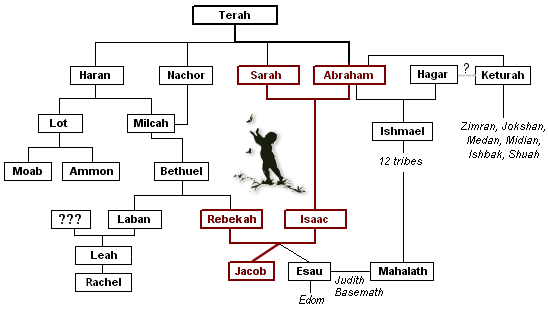
Last week's parashah (Chayei Sarah) related how the faithful servant Eliezer helped find a bride for Isaac from among Abraham's relatives living back in Mesopotamia. In response to his prayer to the LORD, Eliezer was shown that Abraham's nephew's daughter Rebekah (i.e., Rivka bat-Betu'el: רִבְקָה בַּת־בְּתוּאֵל) was chosen to be one of the great matriarchs of Israel.
This week's parashah is about Isaac and Rebekah's family and how the promised Seed would descend through Isaac's son Jacob rather than through his older twin brother Esau. It begins:
|
|
|
|
|
|
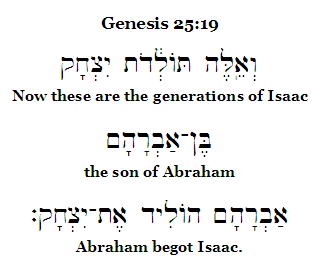
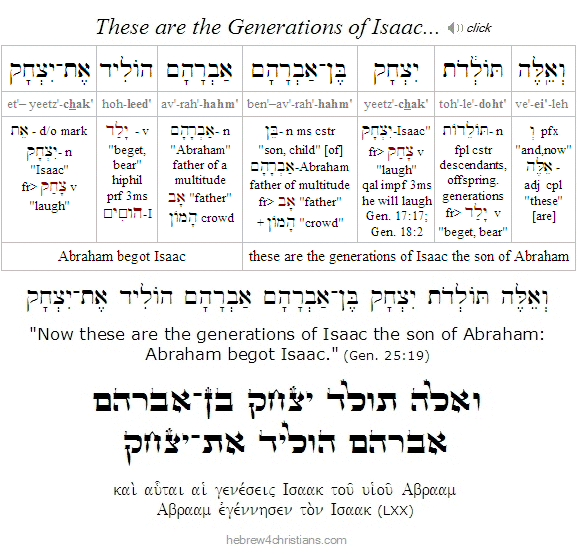
These are the generations of Isaac, Abraham's son: Abraham fathered Isaac,
and Isaac was forty years old when he took Rebekah, the daughter of Bethuel the Aramean of Paddan-aram, the sister of Laban the Aramean, to be his wife. (Gen. 25:19-20)
|
|
|
|
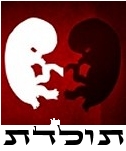
Isaac and Rebekah had been married for twenty years but were still without an heir to carry on the family line. Finally their prayers were answered and Rebekah conceived, though not without complications. When she inquired of the LORD about her travail, He told her that she was carrying twins that would be heads of two rival nations, but the younger child would in fact become the promised heir of the chosen people.
The day came for Rebekah to give birth, and the first child came out "red (אַדְמוֹנִי) and covered with hair," so they called his name Esav ("hairy" or "completed"); then his brother came out with his hand grasping Esau's heel (i.e., akev: עָקֵב), so they named him "Jacob" (i.e., ya'akov: יַעֲקב) from the Hebrew verb (i.e., akav: עָקַב), meaning "to take by the heel; to displace; to supplant." Since Isaac was 60 years old when the twins were born (Gen. 25:26) and he had married Rebekah at age 40 (Gen 25:20), we know that they had waited 20 years for the birth of their first descendants...
Esau became a crafty hunter (i.e., ish yodea tzayid: אִישׁ יֹדֵעַ צַיִד), "a man of the field" (אִישׁ שָׂדֶה) while Jacob was "a wholesome man" (i.e., ish tam: אִישׁ תָּם) who "dwelt in tents" (יֹשֵׁב אֹהָלִים). Isaac favored Esau (וַיֶּאֱהַב יִצְחָק אֶת־עֵשָׂו); because he had a taste for game (כִּי־צַיִד בְּפִיו), but Rebekah favored Jacob (וְרִבְקָה אֹהֶבֶת אֶת־יַעֲקֹב) because she believed the promise of the LORD...
The portion then gives us a look at the spiritual life of the two boys. According to Jewish tradition, on the day of the funeral of their grandfather Abraham, Jacob was cooking lentil soup for Isaac, the traditional mourner's meal. Esau rushed in from a hunting expedition, exhausted and hungry. He then begged Jacob to give him some of "that red stuff" (i.e., ha'dom ha'zeh: הָאָדם הַזֶּה), but Jacob answered that he would give him some only if he would sell him his birthright. Esau, profane as he was in his thinking, and concerned only with his immediate satisfaction, agreed to the terms and discounted his birthright as being worth only a "bowl of beans" (on account of this incident, Esau was given the additional name of "Red' (i.e., אֱדוֹם "Edom"), and some Jewish commentators claim that he became the head of Rome, though this interpretation seems unlikely). Nevertheless, vaiyiven esav et-habechorah, "Esau despised the birthright" (Gen. 25:34).
Next we read how Isaac followed in the footsteps of his father Abraham. A famine occurred in the land of Canaan, and Isaac and Rebekah moved to the town of Gerar (under the jurisdiction of Abimelech of the Philistia), perhaps with the intent of going all the way to Egypt. The LORD then told him not to go, but to remain in promised land, where He would bless him and make his descendants number as the stars in heaven. Isaac obeyed, but presented Rebekah as his sister (as Abraham had done with Sarah) out of fear that he would be killed by someone coveting her beauty. However, like Abraham, Isaac's ruse was exposed, and he was chided by Abimelech for his duplicity.
Isaac and his family then settled in the town of Gerar and became so wealthy and powerful that the Philistines began to envy him. Abimelech finally asked him to settle elsewhere, so Isaac moved to a nearby valley. After a series of contentions with the Gerarites regarding water rights, he finally found rehebot, or room to settle down.
Later Isaac relocated to Be'er Sheva (the place where Hagar heard from the Angel and was later regarded as sacred ground) where the LORD appeared to him and renewed the covenant of Abraham with him. There he built an altar and offered sacrifices to the LORD. Abimelech then sent a delegation to make terms of peace. This section ends with the news that Esau, at the age of forty, married two Hittite women (Judith and Basemath, respectively), described as being a "source of bitterness to Isaac and Rebekah."
The story jumps ahead to when Isaac had grown old and was nearly blind. Thinking that his end was near, he wanted to bless Esau as the family heir before he died (it seems that Isaac wasn't the best family communicator, since doubtlessly Rebekah had long believed Jacob to be the appointed heir, and Jacob had earlier obtained the rights of the bechor (firstborn) by means of the agreement he had made with Esau). Nonetheless, Isaac instructed Esau to go off to hunt for his favorite food, after which he would then give him the formal blessing as the head of promised line.
Rebekah overheard the plan and sprang into action. She instructed Jacob to prepare a similar dish, dress in Esau's cloths, and cover his arms and neck with a goatskin costume to simulate the smell and feel of his more hirsute brother. Then he would pass himself off as Esau and thereby foist the blessing from his father.
Everything went according to Rebekah's scheme, and Jacob received Isaac's blessing (if even under such deceptive circumstances). To Jacob would be "the dew of the heaven and the fat of the land" and mastery over his brother. However, scarcely after having given the blessing of the bechor to Jacob, Esau returned from his hunt with a meal for his father. The deception was then made plain, but Isaac refused to revoke the blessing he had given to Jacob. All that was left for inconsolable Esau was the promise that though he would serve his brother Jacob, eventually he would break his yoke from his neck. At this point, Esau began plotting to murder his brother for his deception.
Upon learning of Esau's intention, Rebekah instructed Jacob to flee back to Haran to stay with her brother Laban until Esau cooled off. She then cajoled Isaac by insisting that she wanted Jacob to marry a woman from the old country - and not one of the Hittite women of Canaan. To his credit, Isaac listened to his wife and told Jacob to go to Haran and find a wife from among his cousins living there.
The parashah ends with the account of Esau's marriage to a third wife named Mahalath (a daughter of Ishmael), in a pathetic attempt to finally gain his parent's approval.
 |
|
|
|
|
The Haftarah for Parashat Toldot comes from the first part of the book of Malachi. Malakhi means "my messenger" and was one of the last of the Hebrew prophets who served the LORD after the Babylonian exile during the Second Temple period.
The LORD had shown great favor to the Jewish people as the descendants of Israel. He had showered them with blessings, even to the exclusion of their ancestor Esau (who despised the role of the priesthood by rejecting his status as bechor). He gave to Israel alone the land of promise, and restored the Temple and priesthood as in the days of old.
Yet despite all the good favor shown to them, the Jewish people showed a disdainful attitude toward the Temple and its service (and therefore to God Himself). Malachi described how the people would offer blind sacrifices or animals that were lame or sick, and thereby held the altar of the LORD in contempt. Moreover, the priests themselves failed to live up to the legacy of the great heroes of the Tribe of Levi.
The haftarah ends with a warning that such contempt would change their blessings as God's chosen people into a curse, since the children of Israel were now acting in a manner that resembled their profane ancestor Esau!
|
|
|
|
Brit Chadashah Overview
|
|
|
|
The reading from the Brit Chadashah reveals Paul's desire to see all of Israel come to understand the truth of salvation as given through the Promised Seed of Abraham, Yeshua the Mashiach.
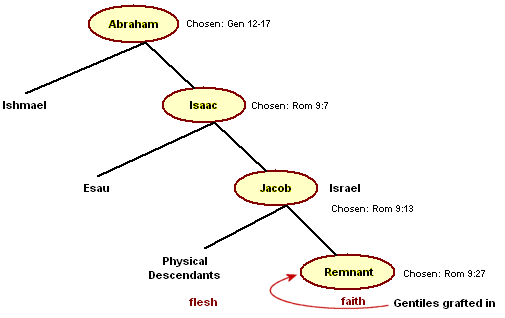
Nevertheless, since it is true that many of the Jewish people have rejected their Mashiach, Paul consoles himself by reflecting that not all physical descendants of Abraham are made the inheritors of the covenantal blessings from the LORD. No, Abraham had two sons, but it was Isaac (not Ishmael) who was chosen; and Isaac also had two sons, but it was Jacob (not Esau) who was chosen. In other words, even though Ishmael and Esau were physical descendants of Abraham, they were not chosen to be inheritors of the blessing of God.
Indeed, regarding the case of Jacob and Esau, Paul goes further by saying that "though they were not yet born and had done nothing either good or bad -- in order that God's purpose of election might continue, not because of works but because of his call -- Rebekah was told, "The older will serve the younger." He then quotes from the haftarah (Malachi 1:3): "Jacob I loved, but Esau I hated."
Paul then asks the rhetorical question of whether all this might be unfair. After all, was it Esau's fault that he was rejected when God had Himself foreordained that the blessing should not be his? Paul answers this by flatly saying that the LORD God of Israel is sovereign and can choose to show mercy and grace to whomsoever He wills - man's objections notwithstanding. In other words, God has the complete right to predestine outcomes to suit His good pleasure and purposes, and mankind must simply accept His rule and reign in the universe.
Being a physical descendant of Abraham is not enough to be a part of God's family, since only the children of the promise are counted as God's offspring. And that even includes "goyim," or Gentiles, as the prophet Hosea revealed: "those who were not my people I will call 'my people,' and her who was not beloved I will call children of the Living God" (Hosea 1:10). And did not the prophet Isaiah also cry out concerning Israel: "Though the number of the sons of Israel be as the sand of the sea, only a remnant of them will be saved"?
Paul ends this line of thinking by saying that those who trust in the promise of God's salvation through the Mashiach have attained righteousness by faith; but those who pursue their own righteousness based on the law will never succeed in reaching that goal, since Yeshua alone is the "end of the law for righteousness" to all who believe:
"For by works of the law no one will be justified in his sight, since through the law comes knowledge of sin. But now the righteousness of God has been manifested apart from the law, although the Law and the Prophets bear witness to it - the righteousness of God through faith in Jesus Christ for all who believe. For there is no distinction: for all have sinned and fall short of the glory of God, and are justified by his grace as a gift, through the redemption that is in Christ Jesus whom God put forward as a propitiation by his blood, to be received by faith." (Romans 3:20-4).
|
|